

Summary
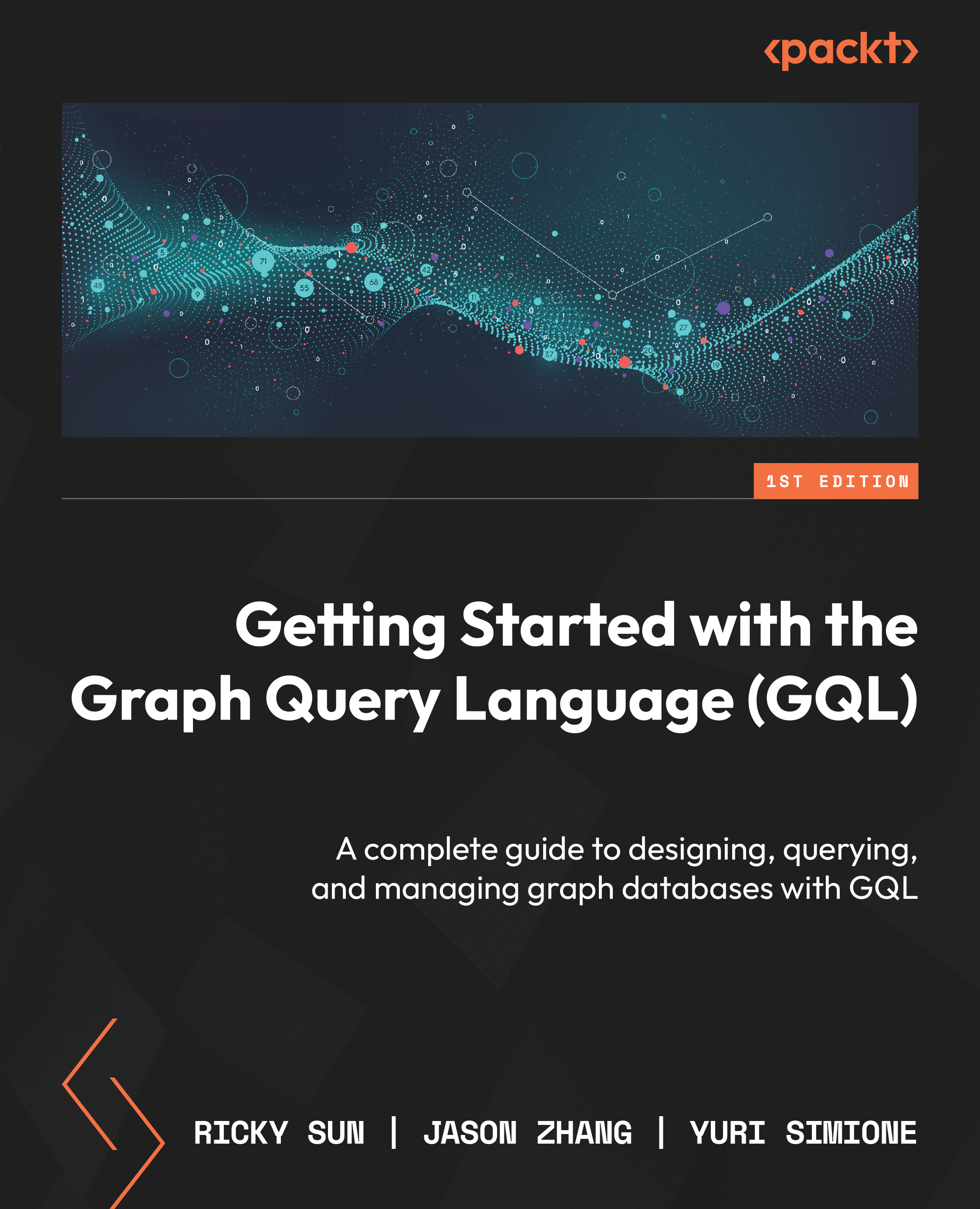
In this chapter, we explored how database query languages have evolved, moving from relational and NoSQL models to the emergence of the graph model. We looked at the challenges traditional databases face when handling complex relationships and how graph databases provide a more intuitive way to manage interconnected data. By tracing the history of data management—from early record-keeping methods to the rise of SQL—we set the stage for understanding why GQL has become necessary and how it’s shaping the future of data querying.
Next, we’ll dive into the fundamentals of GQL and graph theory. We’ll cover essential graph terminology, explore the structure of the GQL catalog system, and see how different value types are handled in GQL. The chapter also includes executable GQL code, giving you a chance to try things out in your own environment or with GQL Playground by Ultipa Graph.
Get This Book’s PDF Version and Exclusive ExtrasScan the QR code (or go to packtpub.com/unlock). Search for this book by name, confirm the edition, and then follow the steps on the page. |
|
|
Note: Keep your invoice handy. Purchases made directly from Packt don’t require an invoice. |