Search icon CANCEL
Subscription
0
Cart icon
Your Cart (0 item)
Close icon
You have no products in your basket yet
Save more on your purchases! discount-offer-chevron-icon
Savings automatically calculated. No voucher code required.
Arrow left icon
Explore Products
Best Sellers
New Releases
Books
Videos
Audiobooks
Learning Hub
Newsletter Hub
Free Learning
Arrow right icon
timer SALE ENDS IN
0 Days
:
00 Hours
:
00 Minutes
:
00 Seconds
Arrow up icon
GO TO TOP
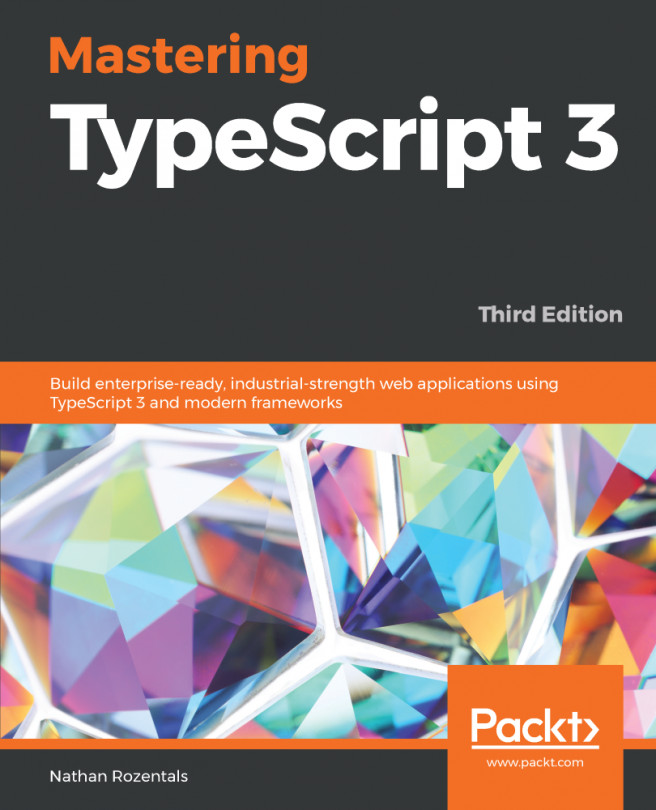
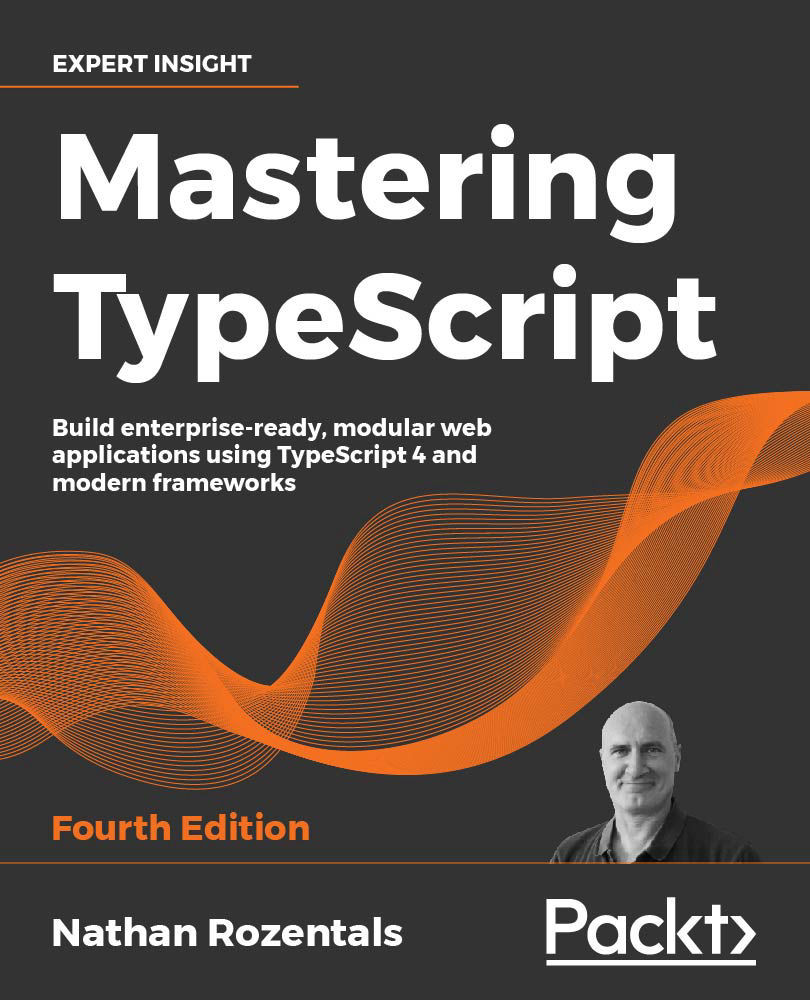
Mastering TypeScript

You're reading from   Mastering TypeScript Build enterprise-ready, modular web applications using TypeScript 4 and modern frameworks

Arrow left icon
Product type Paperback
Published in Apr 2021
Publisher Packt
ISBN-13 9781800564732
Length 538 pages
Edition 4th Edition
Languages
Arrow right icon
Author (1):
Arrow left icon
Nathan Rozentals Nathan Rozentals
Author Profile Icon Nathan Rozentals
Nathan Rozentals
Arrow right icon
View More author details
Toc

Table of Contents (19) Chapters Close

Preface 1. Up and Running Quickly 2. Exploring the Type System FREE CHAPTER 3. Interfaces, Classes, Inheritance, and Modules 4. Generics and Advanced Type Inference 5. Asynchronous Language Features 6. Decorators 7. Integration with JavaScript 8. Strict Compiler Options 9. Using Observables to Transform Data 10. Test-Driven Development 11. Angular 12. React 13. Vue 14. Node and Express 15. An AWS Serverless API 16. Micro Front-ends 17. Other Books You May Enjoy
18. Index

Angular

One of the watershed moments in the story of the TypeScript language came when it was announced that the Microsoft and Google teams had been working together on Angular 2. Angular 2 was a much anticipated update to the popular Angular (or Angular 1) single-page application framework, which was written in JavaScript. The Google team that built Angular 2 originally proposed a new language named AtScript, which would allow Angular 2 applications to use newer ECMAScript 6 and 7 language features, and make the Angular 2 syntax cleaner and easier to understand. It was, in fact, intended for AtScript to run on top of TypeScript.

Following several months of collaboration, it was announced that all of the necessary features of the AtScript language would be absorbed into the TypeScript language, and that Angular 2 would be written in TypeScript. This meant that the providers of the language (Microsoft) and the consumers of the language (Google) were able to agree on the requirements...

lock icon The rest of the chapter is locked
CONTINUE READING
83
Tech Concepts
36
Programming languages
73
Tech Tools
Icon Unlimited access to the largest independent learning library in tech of over 8,000 expert-authored tech books and videos.
Icon Innovative learning tools, including AI book assistants, code context explainers, and text-to-speech.
Icon 50+ new titles added per month and exclusive early access to books as they are being written.
Mastering TypeScript
Register for a free Packt account to unlock a world of extra content!
A free Packt account unlocks extra newsletters, articles, discounted offers, and much more. Start advancing your knowledge today.
Unlock this book and the full library FREE for 7 days
Get unlimited access to 7000+ expert-authored eBooks and videos courses covering every tech area you can think of
Renews at $19.99/month. Cancel anytime
Modal Close icon
Modal Close icon