Search icon CANCEL
Subscription
0
Cart icon
Your Cart (0 item)
Close icon
You have no products in your basket yet
Save more on your purchases! discount-offer-chevron-icon
Savings automatically calculated. No voucher code required.
Arrow left icon
Explore Products
Best Sellers
New Releases
Books
Events
Videos
Audiobooks
Packt Hub
Free Learning
Arrow right icon
timer SALE ENDS IN
0 Days
:
00 Hours
:
00 Minutes
:
00 Seconds
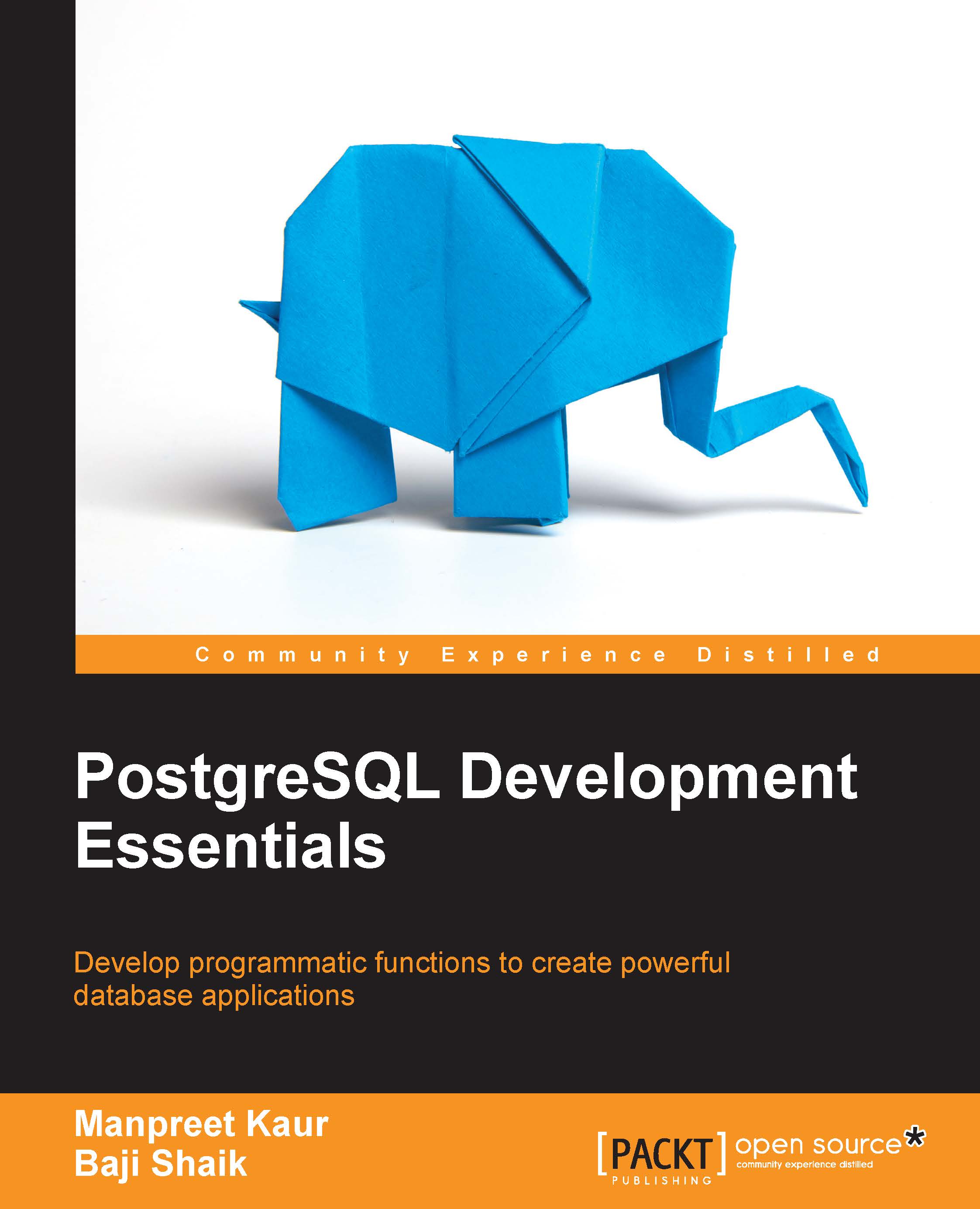
PostgreSQL Development Essentials

PostgreSQL Development Essentials: Advanced querying, data modeling and performance tuning
Arrow left icon
Profile Icon Manpreet Kaur Profile Icon Baji Shaik
Arrow right icon
zł79.99 zł148.99
Full star icon Half star icon Empty star icon Empty star icon Empty star icon 1.5 (2 Ratings)
eBook Sep 2016 210 pages 1st Edition
eBook
zł79.99 zł148.99
Paperback
zł185.99
Subscription
Free Trial
Arrow left icon
Profile Icon Manpreet Kaur Profile Icon Baji Shaik
Arrow right icon
zł79.99 zł148.99
Full star icon Half star icon Empty star icon Empty star icon Empty star icon 1.5 (2 Ratings)
eBook Sep 2016 210 pages 1st Edition
eBook
zł79.99 zł148.99
Paperback
zł185.99
Subscription
Free Trial
eBook
zł79.99 zł148.99
Paperback
zł185.99
Subscription
Free Trial

What do you get with eBook?

Product feature icon Instant access to your Digital eBook purchase
Product feature icon Download this book in EPUB and PDF formats
Product feature icon Access this title in our online reader with advanced features
Product feature icon DRM FREE - Read whenever, wherever and however you want
Modal Close icon
Payment Processing...
tick Completed

Billing Address

Table of content icon View table of contents Preview book icon Preview Book

PostgreSQL Development Essentials

Left arrow icon Right arrow icon

Key benefits

  • Write complex SQL queries and design a robust database design that fits your application's need
  • Improve database performance by indexing, partitioning tables, and query optimizing
  • A comprehensive guide covering the advanced PostgreSQL concepts without any hassle

Description

PostgreSQL is the most advanced open source database in the world. It is easy to install, configure, and maintain by following the documentation; however, it’s difficult to develop applications using programming languages and design databases accordingly. This book is what you need to get the most out of PostgreSQL You will begin with advanced SQL topics such as views, materialized views, and cursors, and learn about performing data type conversions. You will then perform trigger operations and use trigger functions in PostgreSQL. Next we walk through data modeling, normalization concepts, and the effect of transactions and locking on the database. The next half of the book covers the types of indexes, constrains, and the concepts of table partitioning, as well as the different mechanisms and approaches available to write efficient queries or code. Later, we explore PostgreSQL Extensions and Large Object Support in PostgreSQL. Finally, you will perform database operations in PostgreSQL using PHP and Java. By the end of this book, you will have mastered all the aspects of PostgreSQL development. You will be able to build efficient enterprise-grade applications with PostgreSQL by making use of these concepts

Who is this book for?

If you are a PostgreSQL developer with a basic knowledge of PostgreSQL development and you’re want deeper knowledge to develop applications, then this book is for you. As this book does not cover basic installation and configurations, you should have PostgreSQL installed on your machine as a prerequisite.

What you will learn

  • * Write more complex queries with advanced SQL queries
  • * Design a database that works with the application exactly the way you want
  • * Make the database work in extreme conditions by tuning, optimizing, partitioning, and indexing
  • * Develop applications in other programming languages such as Java and PHP
  • * Use extensions to get extra benefits in terms of functionality and performance
  • * Build an application that does not get locked by data manipulation
  • * Explore in-built db functions and data type conversions

Product Details

Country selected
Publication date, Length, Edition, Language, ISBN-13
Publication date : Sep 26, 2016
Length: 210 pages
Edition : 1st
Language : English
ISBN-13 : 9781783989010
Category :
Tools :

What do you get with eBook?

Product feature icon Instant access to your Digital eBook purchase
Product feature icon Download this book in EPUB and PDF formats
Product feature icon Access this title in our online reader with advanced features
Product feature icon DRM FREE - Read whenever, wherever and however you want
Modal Close icon
Payment Processing...
tick Completed

Billing Address

Product Details

Publication date : Sep 26, 2016
Length: 210 pages
Edition : 1st
Language : English
ISBN-13 : 9781783989010
Category :
Tools :

Packt Subscriptions

See our plans and pricing
Modal Close icon
$19.99 billed monthly
Feature tick icon Unlimited access to Packt's library of 7,000+ practical books and videos
Feature tick icon Constantly refreshed with 50+ new titles a month
Feature tick icon Exclusive Early access to books as they're written
Feature tick icon Solve problems while you work with advanced search and reference features
Feature tick icon Offline reading on the mobile app
Feature tick icon Simple pricing, no contract
$199.99 billed annually
Feature tick icon Unlimited access to Packt's library of 7,000+ practical books and videos
Feature tick icon Constantly refreshed with 50+ new titles a month
Feature tick icon Exclusive Early access to books as they're written
Feature tick icon Solve problems while you work with advanced search and reference features
Feature tick icon Offline reading on the mobile app
Feature tick icon Choose a DRM-free eBook or Video every month to keep
Feature tick icon PLUS own as many other DRM-free eBooks or Videos as you like for just zł20 each
Feature tick icon Exclusive print discounts
$279.99 billed in 18 months
Feature tick icon Unlimited access to Packt's library of 7,000+ practical books and videos
Feature tick icon Constantly refreshed with 50+ new titles a month
Feature tick icon Exclusive Early access to books as they're written
Feature tick icon Solve problems while you work with advanced search and reference features
Feature tick icon Offline reading on the mobile app
Feature tick icon Choose a DRM-free eBook or Video every month to keep
Feature tick icon PLUS own as many other DRM-free eBooks or Videos as you like for just zł20 each
Feature tick icon Exclusive print discounts

Frequently bought together


Stars icon
Total 703.97
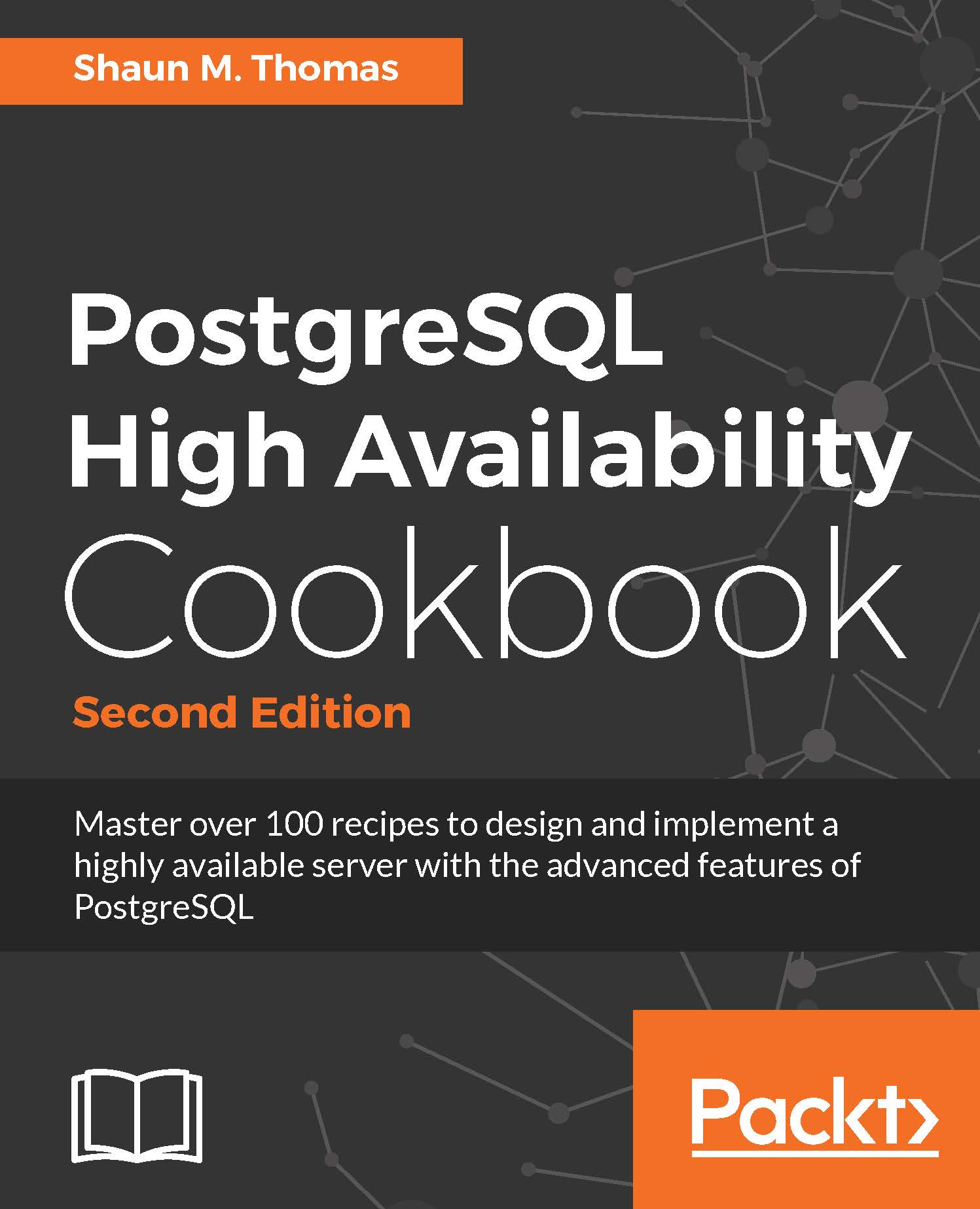
PostgreSQL High Availability Cookbook
zł258.99
PostgreSQL Development Essentials
zł185.99
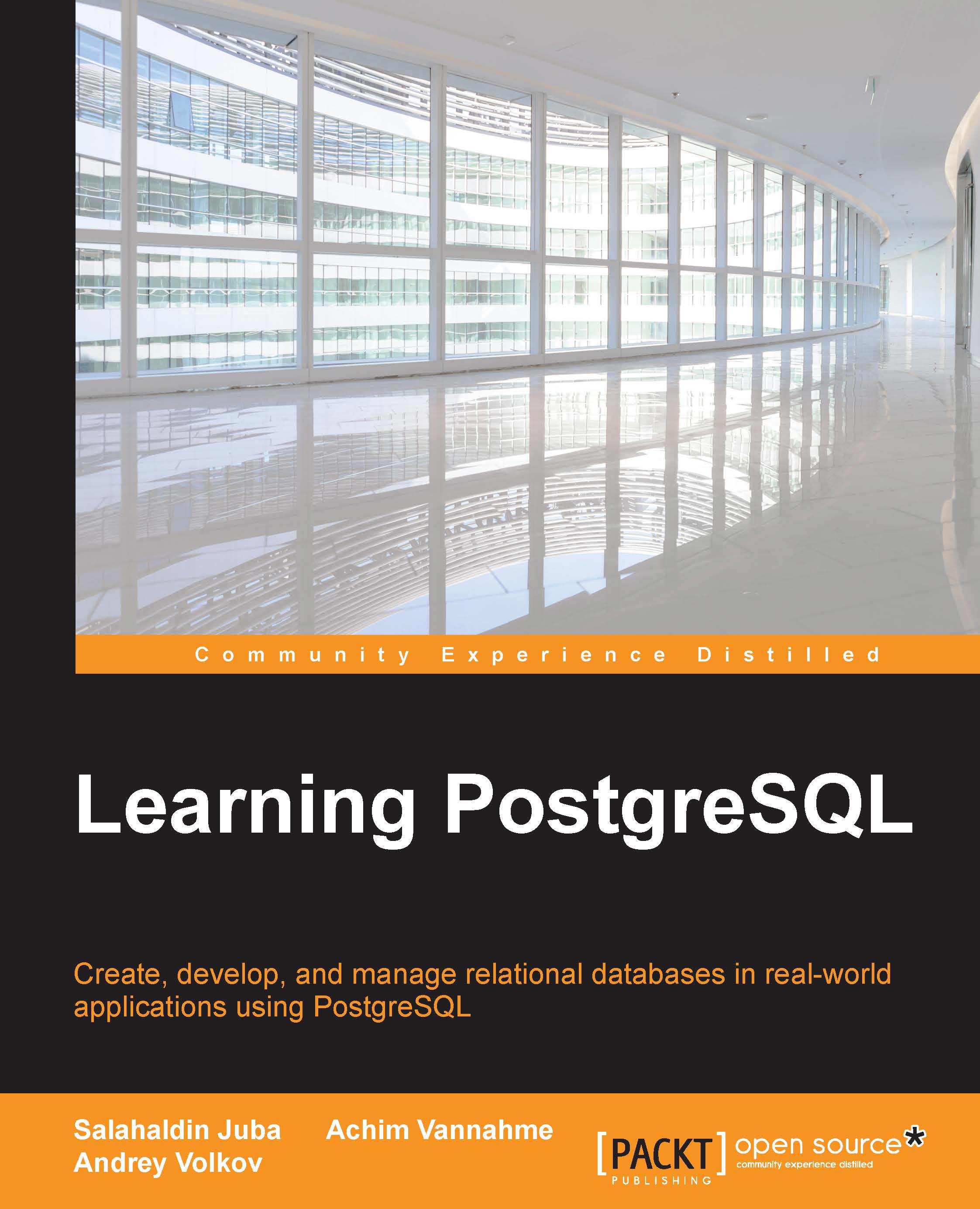
Learning PostgreSQL
zł258.99
Total 703.97 Stars icon

Table of Contents

11 Chapters
1. Advanced SQL Chevron down icon Chevron up icon
2. Data Manipulation Chevron down icon Chevron up icon
3. Triggers Chevron down icon Chevron up icon
4. Understanding Database Design Concepts Chevron down icon Chevron up icon
5. Transactions and Locking Chevron down icon Chevron up icon
6. Indexes and Constraints Chevron down icon Chevron up icon
7. Table Partitioning Chevron down icon Chevron up icon
8. Query Tuning and Optimization Chevron down icon Chevron up icon
9. PostgreSQL Extensions and Large Object Support Chevron down icon Chevron up icon
10. Using PHP in PostgreSQL Chevron down icon Chevron up icon
11. Using Java in PostgreSQL Chevron down icon Chevron up icon

Customer reviews

Rating distribution
Full star icon Half star icon Empty star icon Empty star icon Empty star icon 1.5
(2 Ratings)
5 star 0%
4 star 0%
3 star 0%
2 star 50%
1 star 50%
D. Sauer Aug 29, 2023
Full star icon Full star icon Empty star icon Empty star icon Empty star icon 2
While I'm not going to completely disagree with PK's review, I'm also going to point out that it doesn't know the story of this book. I'm one of the technical reviewers listed in the foreword of the book. There are three things one needs to know about this specific book. First, there are two authors instead of one because the first author just disappeared from Earth after writing a few chapters from the outline. I was asked to complete the book, but for reasons unknown (I suspect "cost of labor"), someone else did it instead. Fine, I'm not holding a grudge over that at all; anyone can self-publish if they want. Second, the critique of grammar in the book is fair, but oh man if you had seen the first drafts... The grammatical editors at Pakt are truly amazing. Unfortunately, they sometimes also change the meaning of the sentences while they're fixing the original grammar. Seriously, the grammatical editors rewrote an easy 80% of this book. And that brings me to the third point - the process. The way this works is: the author writes up a draft, the draft goes to the reviewers, the reviewers add comments, the author integrates those comments at their discretion, then that integrated result goes to the publisher's editors to clean up and arrange. So the reviewers listed in the front of the book, like me, can theoretically be amazing (not that I'm necessarily "amazing", but I do have sufficient competence to manage these simple examples). That doesn't mean their input is necessarily getting to the published book unless 1) the author integrates the feedback *and* 2) the editors later don't mangle things to make the examples appear incorrect.I can assure anyone who's reading this that the examples *all* were verified as working properly and fit the way I interpreted the author when I handed my notes back. Don't send all of the names from the book down with the ship; some of us only got paid in the form of a free book for our time (which was significant on this one), and had no control of the final content. :D
Amazon Verified review Amazon
PK Jan 18, 2018
Full star icon Empty star icon Empty star icon Empty star icon Empty star icon 1
This book consists of a random selection of semi-literate re-hashes of the user manual and Wikipedia pages, along with a few code examples, most of which are broken.The authors jump from one topic to the next, never explaining anything in any real detail. For example, chapter one flits aimlessly from creating views, to creating cursors, to the GROUP BY clause to ‘complex’ topics such as subqueries and joins. This must be the only book on any database in which cursors are mentioned in the first few pages.Here are a few examples of how wretched the text is. For example, the section on cursors says:“It then uses a FETCH statement with the NEXT keyword to select the fifth row, and then another FETCHstatement with the PRIOR keyword to again select the fourth retrieved row.’To illustrate this, the authors provide the following:FETCH 4 FROM order_cur;Clearly, some code has been missed out, and nobody has noticed.In the section on JSON, several lines have again been missed out and/or replaced with the wrong code:“Let's create a normal table and insert data into it:CREATE TABLE product_info (id serial, product_name text, product_categorytext, price int);INSERT INTO product_info (product_name ,product_category , price)VALUES ('Chair', 'Furniture', 200);Now, since we have inserted the record in a normal way, we will change this to the JSONformat. We will use the row_to_json function:row_to_json-----------------------------------------------{"f1":"Chair","f2":"Furniture","f3":200}(1 row)”I have no idea if the authors actually believe that typing ‘row_to_json’ would produce the result they claim: it obviously doesn’t. Nor does it work like this inside the obviously needed select statement. The next few lines are even more bizarre:“Similarly, we can output the array values as JSON with the help of the array_to_json function:CREATE TABLE product_info(id serial, product_category text, producttext[]);INSERT INTO product_info (product_category , product) VALUES('Stationary', '{"Pen","Pencil"}');”Nothing is being output as JSON: instead, a new table is being created using JSON instead of text.Here’s another strange explanation:SELECT product, SUM(sale) AS "Total sales"FROM order_detailsGROUP BY product;‘In the select statement, we have sales where we applied the SUM function and the other fieldproduct is not part of SUM, we must use in the GROUP BY clause.’The authors are attempting to say “we must group on a field other than the one which we are aggregating: we use ‘group by’ on the product field and use the aggregate sum() function on the ‘sale’ field’”.Here’s yet another example where the explanation is incomprehensible:“The HAVING clause is used to specify which individual group(s) is to be displayed, or in simple language we use theHAVING clause in order to filter the groups on the basis of an aggregate function condition.”Compare this drivel with the clear explanation in the (free) user manual:“WHERE selects input rows before groups and aggregates are computed (thus, it controls which rows go into the aggregate computation), whereas HAVING selects group rows after groups and aggregates are computed.”The section on transactions fails to explain either how isolation levels work or which ones PostgreSQL implements. The explanation of serializable isolation is particularly inadequate:‘As you saw in the preceding table, moving from the Read Uncommitted to Serializable level, the phenomena behavior is reducing.’In those cases where there isn’t a Wikipedia page as a source, the text descends into meaningless waffle. For example:“In a largely built database, there are cases where performance may not be up to the desiredexpectations. And, achieving more practical goals may spoil the purity of the design. Thesteps for the optimized design should be considered with the utmost priority before youeven consider any optimization.”Clearly, neither of the authors has a proper grasp of English, and neither has enough experience of PostgreSQL to be able to write a useful book on the subject. Unbelievably, this garbage has been checked by over a dozen people. The book boasts a copy editor, two reviewers, a proof-reader, a technical editor, a content development editor, a production coordinator, a commissioning editor, an acquisition editor and a production coordinator. All of these people must be even more inept at their job than the authors or else asleep.
Amazon Verified review Amazon
Get free access to Packt library with over 7500+ books and video courses for 7 days!
Start Free Trial

FAQs

How do I buy and download an eBook? Chevron down icon Chevron up icon

Where there is an eBook version of a title available, you can buy it from the book details for that title. Add either the standalone eBook or the eBook and print book bundle to your shopping cart. Your eBook will show in your cart as a product on its own. After completing checkout and payment in the normal way, you will receive your receipt on the screen containing a link to a personalised PDF download file. This link will remain active for 30 days. You can download backup copies of the file by logging in to your account at any time.

If you already have Adobe reader installed, then clicking on the link will download and open the PDF file directly. If you don't, then save the PDF file on your machine and download the Reader to view it.

Please Note: Packt eBooks are non-returnable and non-refundable.

Packt eBook and Licensing When you buy an eBook from Packt Publishing, completing your purchase means you accept the terms of our licence agreement. Please read the full text of the agreement. In it we have tried to balance the need for the ebook to be usable for you the reader with our needs to protect the rights of us as Publishers and of our authors. In summary, the agreement says:

  • You may make copies of your eBook for your own use onto any machine
  • You may not pass copies of the eBook on to anyone else
How can I make a purchase on your website? Chevron down icon Chevron up icon

If you want to purchase a video course, eBook or Bundle (Print+eBook) please follow below steps:

  1. Register on our website using your email address and the password.
  2. Search for the title by name or ISBN using the search option.
  3. Select the title you want to purchase.
  4. Choose the format you wish to purchase the title in; if you order the Print Book, you get a free eBook copy of the same title. 
  5. Proceed with the checkout process (payment to be made using Credit Card, Debit Cart, or PayPal)
Where can I access support around an eBook? Chevron down icon Chevron up icon
  • If you experience a problem with using or installing Adobe Reader, the contact Adobe directly.
  • To view the errata for the book, see www.packtpub.com/support and view the pages for the title you have.
  • To view your account details or to download a new copy of the book go to www.packtpub.com/account
  • To contact us directly if a problem is not resolved, use www.packtpub.com/contact-us
What eBook formats do Packt support? Chevron down icon Chevron up icon

Our eBooks are currently available in a variety of formats such as PDF and ePubs. In the future, this may well change with trends and development in technology, but please note that our PDFs are not Adobe eBook Reader format, which has greater restrictions on security.

You will need to use Adobe Reader v9 or later in order to read Packt's PDF eBooks.

What are the benefits of eBooks? Chevron down icon Chevron up icon
  • You can get the information you need immediately
  • You can easily take them with you on a laptop
  • You can download them an unlimited number of times
  • You can print them out
  • They are copy-paste enabled
  • They are searchable
  • There is no password protection
  • They are lower price than print
  • They save resources and space
What is an eBook? Chevron down icon Chevron up icon

Packt eBooks are a complete electronic version of the print edition, available in PDF and ePub formats. Every piece of content down to the page numbering is the same. Because we save the costs of printing and shipping the book to you, we are able to offer eBooks at a lower cost than print editions.

When you have purchased an eBook, simply login to your account and click on the link in Your Download Area. We recommend you saving the file to your hard drive before opening it.

For optimal viewing of our eBooks, we recommend you download and install the free Adobe Reader version 9.

Modal Close icon
Modal Close icon