

Discussing basic features of VS Code
With a brief introduction to development tools, we will now start off our learning journey by exploring some basic features of VS Code.
Files and folders
Unlike an IDE, VS Code does not depend on creating a solution or a project file. Your project is your folder, with subfolders and files in it. You can use the File menu and Open File... or Open Folder to start editing, as illustrated in the following screenshot:
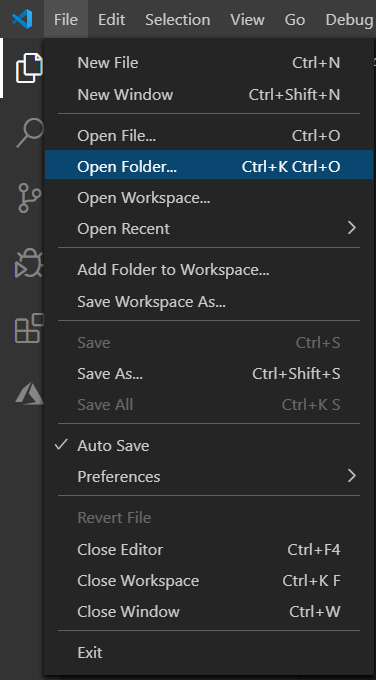
Figure 1.1 – File menu in VS Code editor
Opening the folder will load all the files of the folder in VS Code. You can open multiple folders at a time. These folders will be available in the left pane of the editor.
Workspace
Often, your product will be organized into multiple interlinked projects. In this case, VS Code provides an option to combine these folders in a workspace. This way, when you open a workspace, it will open all the related project folders.
To do this, you can simply select the Add Folder to Workspace… option and then use Save Workspace As… to save your workspace. This will generate a file of type .code-workspace that will contain all the folder names included in this workspace, as illustrated in the following screenshot:

Figure 1.2 – Project folders and the workspace file
Opening the workspace in the editor will open the linked project folders. The following screenshot shows how the workspace and folders are linked together in VS Code:
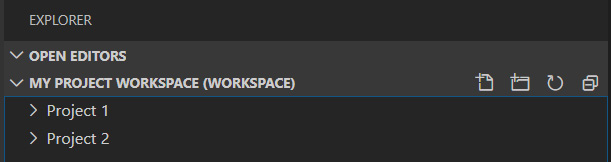
Figure 1.3 – Project folders part of workspace in the editor
The following code snippet shows the content of the .code-workspace file, for the preceding two projects:
{
	''folders'': [
		{
			''path'': ''Project 1''
		},
		{
			''path'': ''Project 2''
		}
	],
	''settings'': {}
}
The .code-workspace file stores the path of folders linked in the workspace.
IntelliSense
One of the most powerful features for any developer is code completion: it comes in very handy when the development environment prompts the methods or attributes of a class, or suggests a list of keywords matching with what you are typing.
VS Code provides out-of-the-box IntelliSense for JavaScript, TypeScript, Javascript Object Notation (JSON), HTML, CSS, and Sassy CSS (SCSS). If this list does not satisfy your requirements, you can add a language extension of your choice from the marketplace. Just as with any other IDE, use Ctrl + spacebar to trigger the IntelliSense for the context.
Tasks
Compared to editors, IDEs provide automated and well-integrated processes that increase the productivity of a developer. These can include build processes, linting, and deployment, among others. VS Code provides similar functionality through its Tasks framework, which is illustrated in the following screenshot:
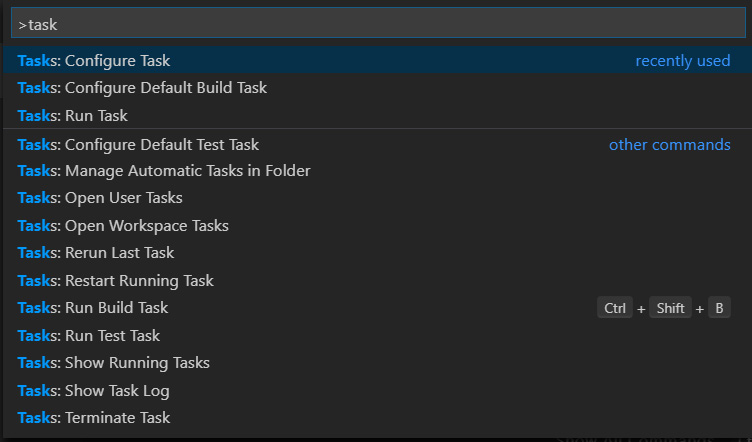
Figure 1.4 – Command Palette showing the Tasks option
Based on the files in your projects, it can detect tasks for build tools such as gulp, grunt, jake, and npm and also provides an option to create your own task runners using predefined templates. You can also link your tasks to the overall build process, which is triggered by Ctrl + Shift + B. Have a look at the following screenshot:

Figure 1.5 – Select a task template
The preceding screenshot shows the list of task templates to choose from.
Debugging
Another important feature of VS Code is the ability to debug code. Using VS Code, you can debug Node.js, JavaScript, and TypeScript out of the box, as illustrated in the following screenshot:

Figure 1.6 – Multiplatform debugging support
Apart from the preceding code base, you can install debugger extensions from the marketplace within the tool, as illustrated in the following screenshot:
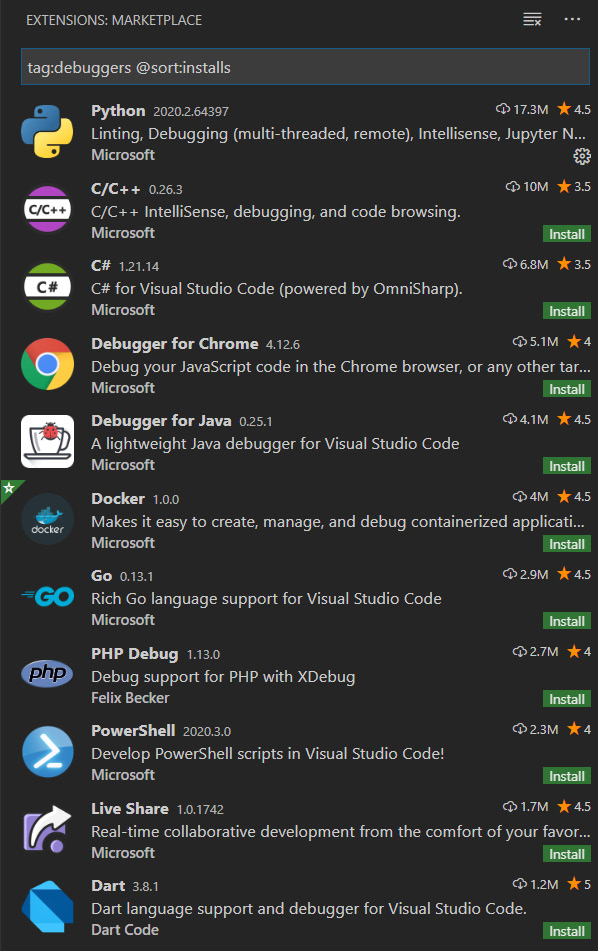
Figure 1.7 – Debugger extensions on marketplace
Chapter 6, Debugging Techniques, is dedicated to exploring debugging in detail with VS Code.
Version control
VS Code integrates Git for version control. You can quickly initialize your Git repository by calling the command palette with Ctrl + Shift + P or Command + Shift + P and selecting Git: Initialize Repository, as illustrated in the following screenshot:
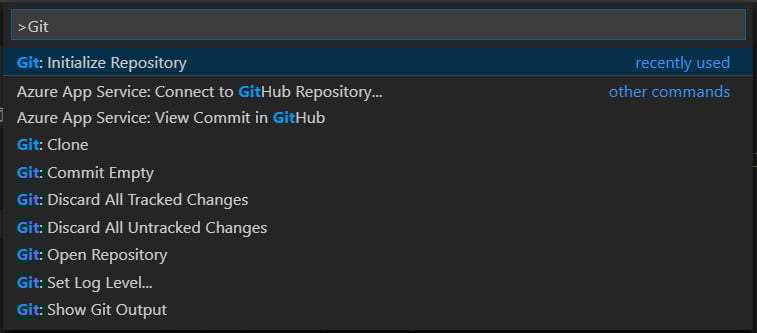
Figure 1.8 – Initialize Git repository using the command palette
To clone a repository, call the command palette and select Git: Clone, VS Code will request you to enter the Uniform Resource Locator (URL). After entering the URL, you can specify the folder or directory where you want your code to be cloned. The Git: Clone functionality can be seen in the following screenshot:

Figure 1.9 – Clone Git repository using the command palette
Additionally, you can also search for your favorite source code management tool extensions, as illustrated in the following screenshot:
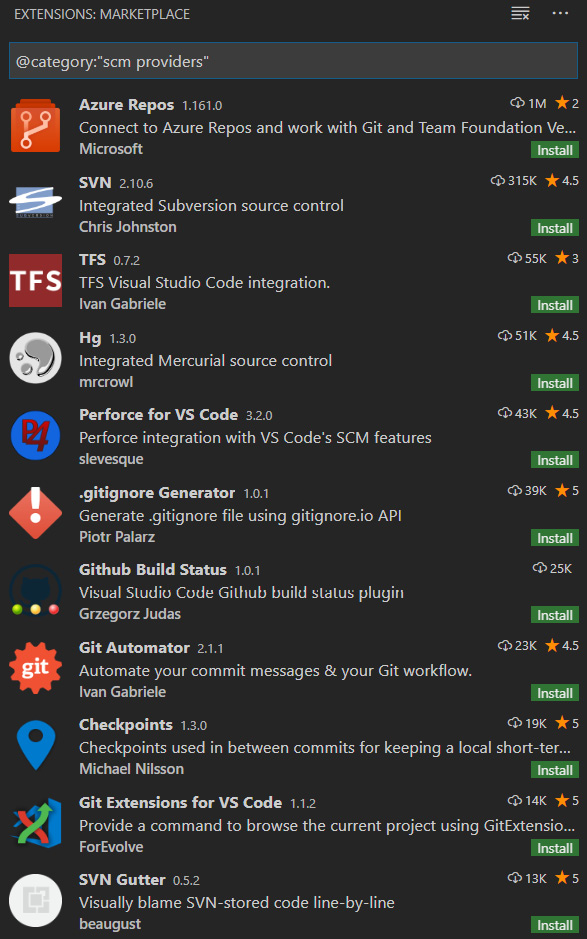
Figure 1.10 – Integrate other source code management extensions from marketplace
The preceding screenshot shows a list of source code management extensions available in VS Code.
Keyboard shortcuts
Keyboard shortcuts provide quick accessibility of features; using them, you can navigate to options using commands instead of menus. To view a complete list of keyboard shortcuts, you can go to Files | Preferences | Keyboard Shortcuts. You can also use the pencil icon  to change the shortcut.
We have now explored some basic features of VS Code. Next, let's move toward setting up our VS Code environment.