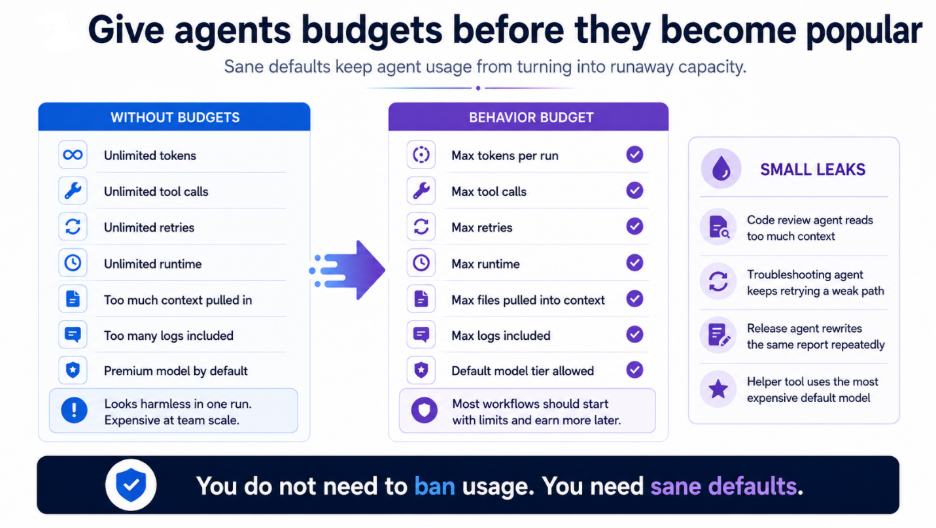
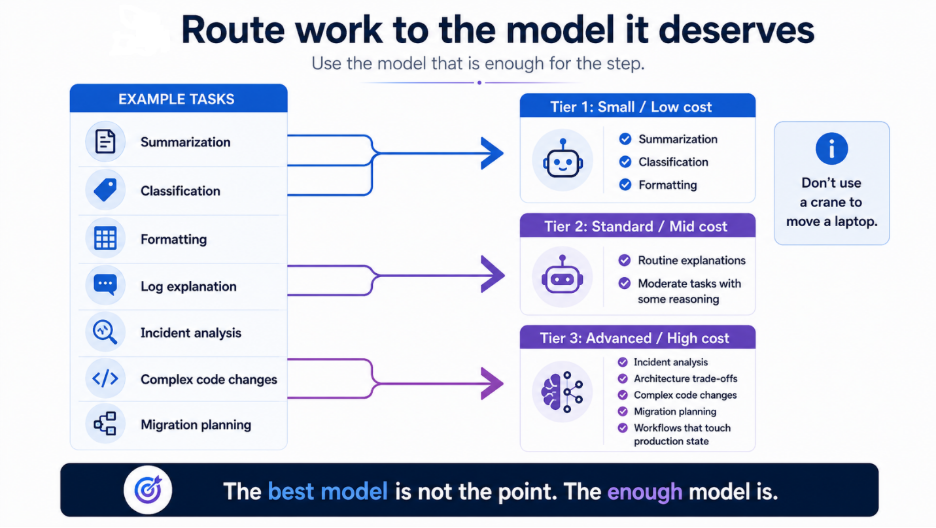
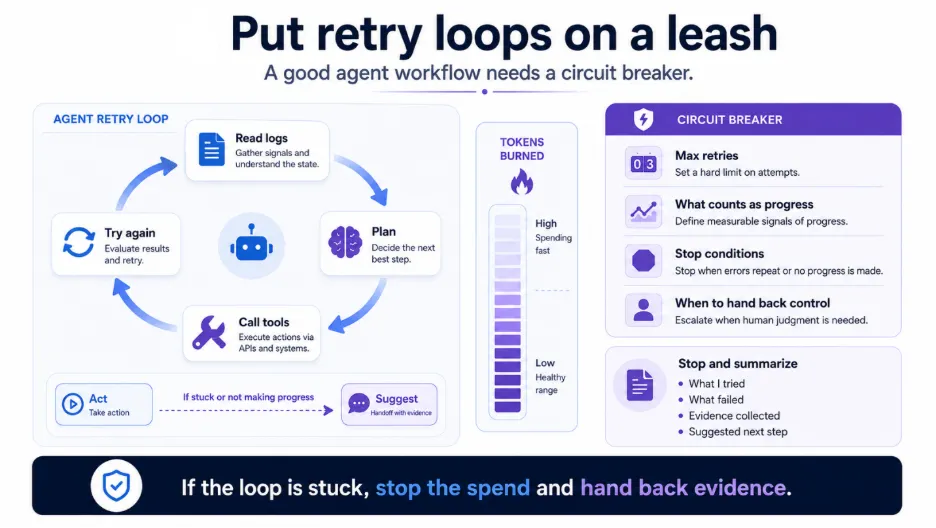
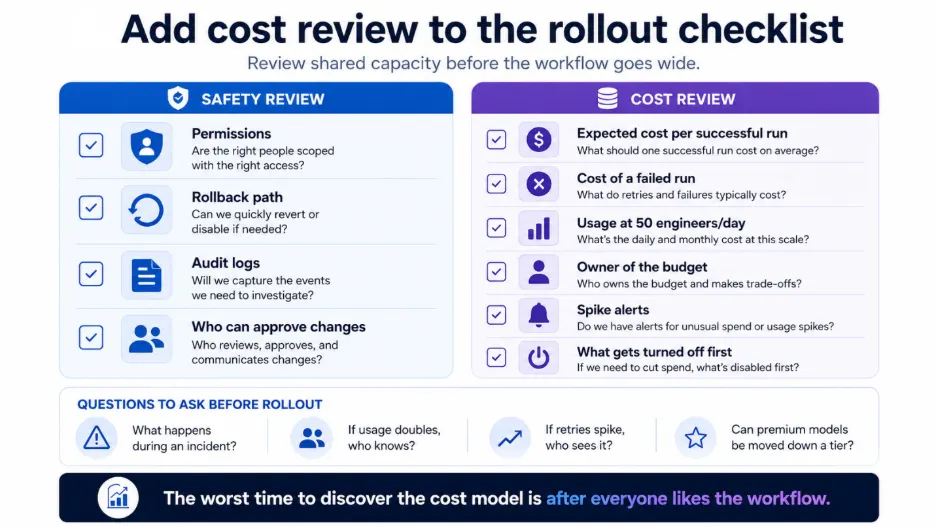
For years, most developer toolsbehavedlike office software. You bought seats, assigned licenses, and forgot about it until renewal season. Agents do not work that way. They consume tokens, context, model capacity, tool calls, retries, logs, CI minutes, and review time.
Sothe useful question for platform teams is not “is AI getting expensive?” Of course it is. The useful question is: are we operating agent usage like shared production capacity, or are we treating it like a bunch of harmless subscriptions?
Here are five thingsI’dfix before agent usage becomes another mystery bill.
Break the bill down by workflow
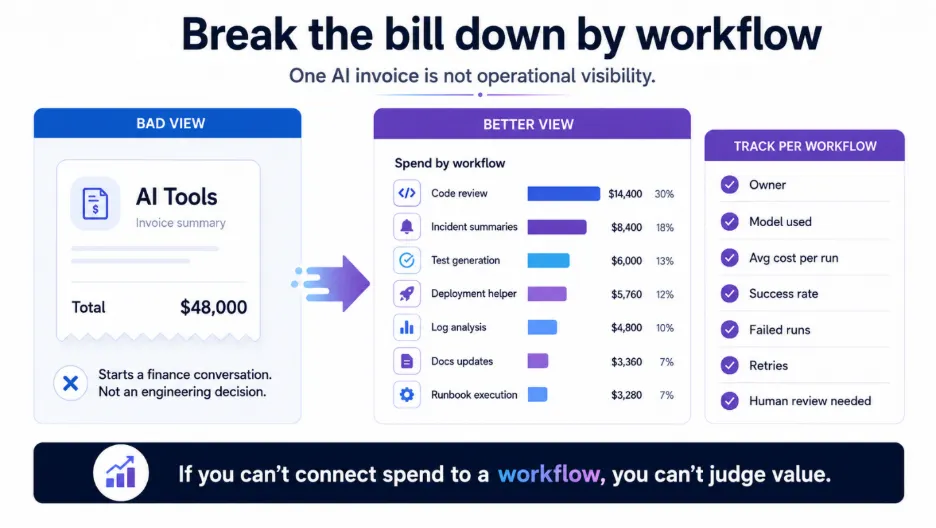
The worst version of AI spend is one large monthly number called “Copilot,” “Claude,” “OpenAI,” or “AI tools.”That number will start a finance conversation, but it will not help an engineering team make a decision.
You need to know which workflows are consuming the money: code review, incident summaries, release notes, test generation, deployment helpers, log analysis, ticket triage, documentation updates, runbook execution. Once you see that split, the conversation changes. A workflow that saves ten engineers an hour every week may be worth the cost. A workflow that writes long summaries nobody readsprobably isnot.
You already do this elsewhere. Shared infra gets tags. CI jobs get owners. Cloud spend gets split by service, team, or environment. Agents should not be exempt just because the invoice arrives under onevendorname.
Startsimple. Track the workflow name, owner, model used, average cost per run, success rate, failed runs, retries, and whether human review was needed. That is enough to stop guessing.
If you cannot connectspendto a workflow, you cannot tell whether the agent is creating value or just making the bill more interesting.


 United States

 Great Britain
 India
India
 Germany
 France
 Canada
 Russia
 Spain
Spain
 Brazil
 Australia
 Singapore
 Canary Islands
 Hungary
 Ukraine
 Luxembourg
 Estonia
 Lithuania
 South Korea
 Turkey
 Switzerland
 Colombia
 Taiwan
 Chile
Chile
 Norway
 Ecuador
 Indonesia
 New Zealand
 Cyprus
 Denmark
 Finland
 Poland
 Malta
Malta
 Czechia
 Austria
 Sweden
 Italy
Italy
 Egypt
Egypt
 Belgium
 Portugal
 Slovenia
 Ireland
 Romania
 Greece
 Argentina
 Netherlands
 Bulgaria
 Latvia
 South Africa
 Malaysia
 Japan
Japan
 Slovakia
 Philippines
 Mexico
 Thailand