-
Bridge the gap between C and modern C++ for embedded systems through practical examples
-
Learn how to save memory and cut down on runtime computing using compile-time computation techniques
-
Improve your software design skills by applying patterns to solve common problems in embedded systems using C++
-
Purchase of the print or Kindle book includes a free PDF eBook
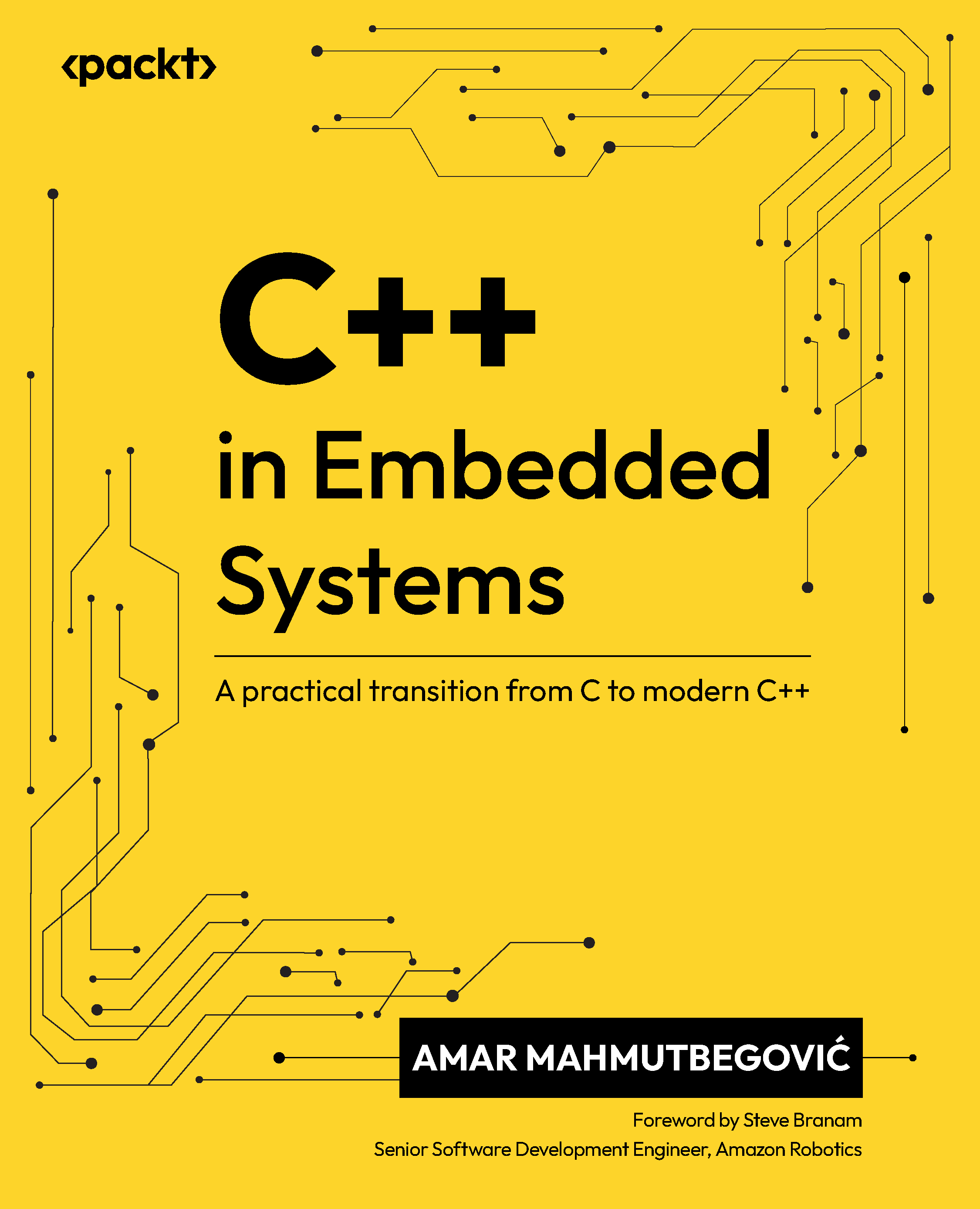
Transitioning from C can be daunting, with concerns about performance overhead, added complexity, and unfamiliar tooling. Addressing these challenges, Amar Mahmutbegovic, an advocate for modern C++ in embedded development, shows how to harness zero-cost abstractions, compile-time checks, and modern C++ capabilities to preserve performance while achieving safer, cleaner code. This book bridges the gap between traditional C and advanced C++, helping you retain the efficiency C developers expect while unlocking safety and expressiveness of modern C++.
Starting with a modern development environment setup, including a Docker container for seamless example replication, you’ll overcome challenges of using the C++ standard library in memory-constrained settings and explore the Embedded Template Library (ETL) as an alternative. The book walks through essential C++ concepts before exploring advanced topics such as templates, strong typing, error handling, compile-time computation, and RAII. Through practical examples, you'll implement a sequencer, write a type-safe HAL, and apply patterns like Command, State, and Observer to solve embedded problems.
By the end, you’ll be able to apply modern C++ to develop robust, modular firmware with performance matching or exceeding hand-coded C solutions.
*Email sign-up and proof of purchase required
This book is for embedded developers who primarily use C and want to adopt a modern C++ approach. It introduces fundamental C++ concepts, making it suitable for beginners, while also assuming basic familiarity to fully leverage advanced features like compile-time computation. Even those with prior C++ experience will discover new ways to apply modern best practices to write more efficient and maintainable embedded applications.
-
Debunk myths and misconceptions about using C++ in embedded systems
-
Set up build automation tailored for C++ in constrained environments
-
Leverage strong typing to improve type safety
-
Apply modern C++ techniques, such as Resource Acquisition Is Initialization (RAII)
-
Use Domain Specific Language (DSL) with a practical example using Boost SML
-
Implement software development best practices, including the SOLID principle, in embedded development


 United States

 Great Britain
 India
India
 Germany
 France
 Canada
 Russia
 Spain
Spain
 Brazil
 Australia
 Singapore
 Canary Islands
 Hungary
 Ukraine
 Luxembourg
 Estonia
 Lithuania
 South Korea
 Turkey
 Switzerland
 Colombia
 Taiwan
 Chile
Chile
 Norway
 Ecuador
 Indonesia
 New Zealand
 Cyprus
 Denmark
 Finland
 Poland
 Malta
Malta
 Czechia
 Austria
 Sweden
 Italy
Italy
 Egypt
Egypt
 Belgium
 Portugal
 Slovenia
 Ireland
 Romania
 Greece
 Argentina
 Netherlands
 Bulgaria
 Latvia
 South Africa
 Malaysia
 Japan
Japan
 Slovakia
 Philippines
 Mexico
 Thailand




 Filter

 Previous
 Next
Next
