Search icon CANCEL
Subscription
0
Cart icon
Your Cart (0 item)
Close icon
You have no products in your basket yet
Save more on your purchases! discount-offer-chevron-icon
Savings automatically calculated. No voucher code required.
Arrow left icon
Explore Products
Best Sellers
New Releases
Books
Videos
Audiobooks
Learning Hub
Newsletter Hub
Free Learning
Arrow right icon
timer SALE ENDS IN
0 Days
:
00 Hours
:
00 Minutes
:
00 Seconds
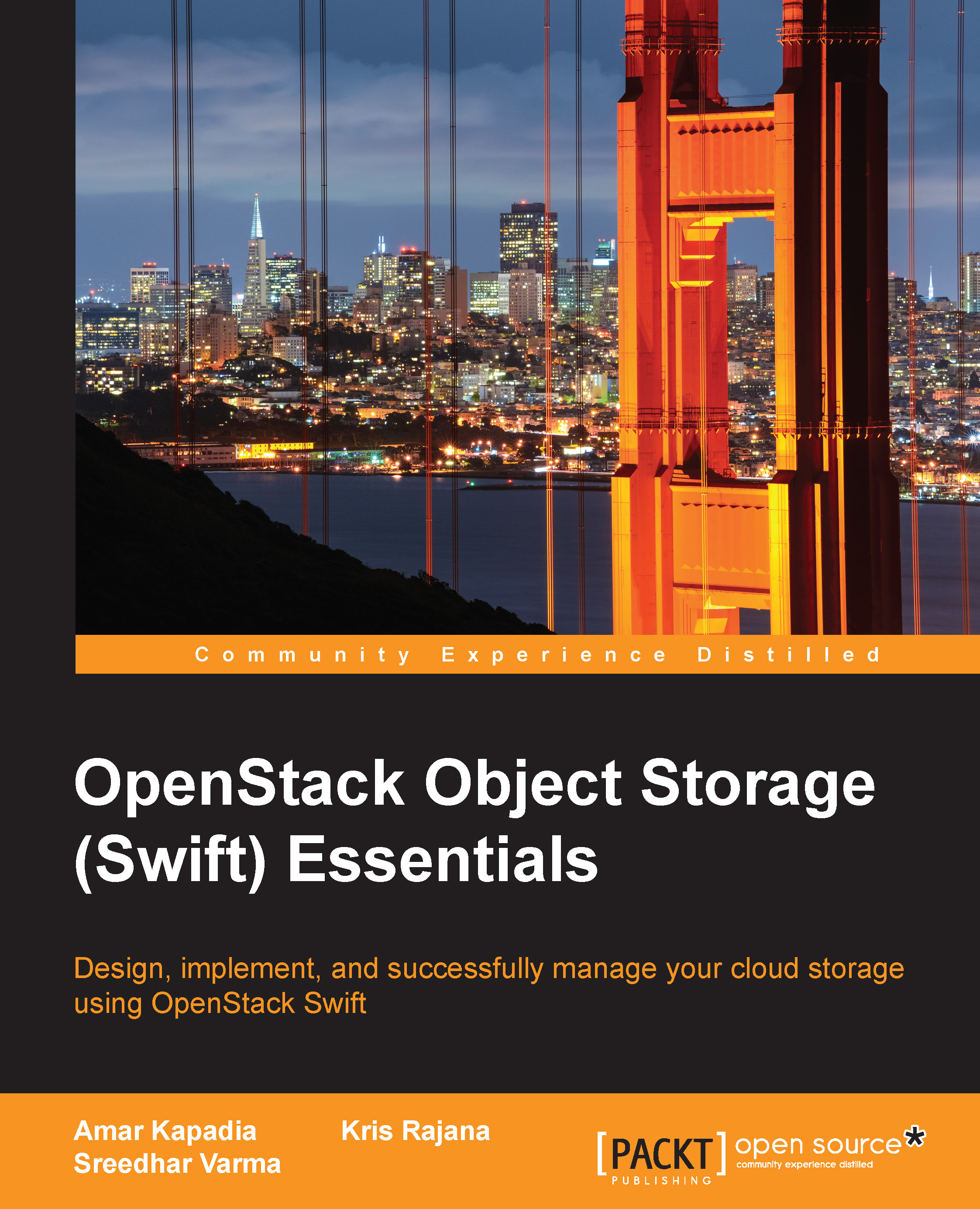
OpenStack Object Storage Essentials (Update)

OpenStack Object Storage Essentials (Update): Design, implement, and successfully manage your cloud storage using OpenStack Swift

Arrow left icon
Profile Icon Amar Kapadia Profile Icon Sreedhar Varma
Arrow right icon
$32.99
Full star icon Full star icon Full star icon Full star icon Full star icon 5 (1 Ratings)
Paperback May 2015 174 pages 1st Edition
eBook
$23.39 $25.99
Paperback
$32.99
Subscription
Free Trial
Renews at $19.99p/m
Arrow left icon
Profile Icon Amar Kapadia Profile Icon Sreedhar Varma
Arrow right icon
$32.99
Full star icon Full star icon Full star icon Full star icon Full star icon 5 (1 Ratings)
Paperback May 2015 174 pages 1st Edition
eBook
$23.39 $25.99
Paperback
$32.99
Subscription
Free Trial
Renews at $19.99p/m
eBook
$23.39 $25.99
Paperback
$32.99
Subscription
Free Trial
Renews at $19.99p/m

What do you get with Print?

Product feature icon Instant access to your digital copy whilst your Print order is Shipped
Product feature icon Paperback book shipped to your preferred address
Product feature icon Redeem a companion digital copy on all Print orders
Product feature icon Access this title in our online reader with advanced features
Product feature icon DRM FREE - Read whenever, wherever and however you want
Modal Close icon
Payment Processing...
tick Completed

Shipping Address

Billing Address

Shipping Methods
Table of content icon View table of contents Preview book icon Preview Book

OpenStack Object Storage Essentials (Update)

Chapter 1. Cloud Storage – Why Can't I Be Like Google?

If you could build your IT systems and operations from scratch today, would you recreate what you have? That's the question Geir Ramleth, CIO of the construction giant Bechtel, asked himself in 2005. The answer was obviously not, and Bechtel ended up using the best practices from four Internet forerunners of that time—YouTube, Google, Amazon, and Salesforce—to create their next set of data centers.

This is exactly the same question CIOs and IT administrators around the world are asking themselves! In this book, you will learn about a revolutionary new storage system called cloud storage that uses the best practices (though not the exact technologies) of these web giants. This will cut the total cost of ownership (TCO) of storage by more than 10 times compared to traditional enterprise block or file storage.

This book will show you how you can implement cloud storage using a leading open source storage software stack called OpenStack Swift. Let's first explore some key elements that constitute cloud storage:

  • Dramatic reduction in TCO
  • Unlimited scalability
  • Elasticity achieved by virtualization
  • On-demand; that is, pay for what you use
  • Universal, that is, access from anywhere
  • Multitenancy, which means sharing storage hardware with other departments or companies
  • Data durability and availability, even with partial failures of the storage system

What constitutes cloud storage?

Let's review each of these elements of cloud storage in more detail.

Reduced TCO

Reduced TCO is the crux of cloud storage. Unless this new storage cuts storage cost by more than 10 times, it is not worth switching from block or file storage and dealing with something new and different. By total cost of ownership, we mean the total of capital expenditure (CAPEX) which involves equipment and operational expenditure (OPEX) in the form of IT storage administrators, electricity, power, cooling, and so on. This TCO reduction must be achieved without sacrificing durability (keeping data intact) or availability.

Unlimited scalability

Whether the cloud storage offering is public (that is, offered by a service provider) or private (that is, offered by central IT), it must have unlimited scalability. As we will see, cloud storage is built on distributed systems, which means that it scales very well. Traditional storage systems typically have an upper limit, making them unsuitable for cloud storage.

Elastic

Storage virtualization decouples and abstracts the storage pool from its physical implementation. This means that you can get an elastic (grow and shrink as required) and unified storage pool, when in reality, the underlying hardware is neither. IT professionals who have spent endless hours forecasting data growth and then waiting for their equipment will appreciate the magnitude of this benefit.

On-demand

Consumers do not reserve blocks of electricity and pay for it upfront, yet we routinely pay for storage upfront, whether we use it or not. Cloud storage uses a pay-as-you-go model, where you pay only for the data stored and the data accessed. For a private cloud, there is a minimal cluster to start with, beyond which it is on-demand. This can result in huge cost savings for the storage user.

Universal access

Existing enterprise storage has limitations in terms of access. Block storage is very limiting; a server has to be on the same storage area network, and storage volumes cannot be shared. Network-attached-storage (NAS) must be mounted to access it. This creates limitations on the number of clients and requires LAN access.

Cloud storage is extremely flexible—there is no limit on the number of users or from where you can access it. This is possible since cloud storage systems usually use a REST API over HTTP (GET, PUT, POST, and DELETE) instead of the traditional SCSI or CIFS/NFS protocols.

Multitenancy

Cloud storage is typically multi-tenant. The tenants may be different organizations in a public cloud or different departments in a private cloud. The benefit is centralized management and higher storage utilization, which reduces costs. Security, often an issue with multi-tenant systems, is addressed comprehensively in cloud storage through strong authentication, access controls, and various encryption options.

Data durability and availability

Cloud storage is able to run on commodity hardware, yet it is highly durable and available. This is even more impressive in that durability and availability is maintained in the face of a partial system failure. As with many modern distributed systems, the burden of data durability and availability is on the software layer rather than the underlying hardware layer.

Limitations of cloud storage

While cloud storage has numerous benefits, there are some limitations in the areas of performance and new APIs.

Performance

Storage systems have struggled to balance reliability, cost, and performance. Generally, you can get two out of these three aspects. Cloud storage optimizes reliability and cost, but not performance. In fact, as we will see later, reliability in cloud storage is better than the traditional RAID when you reach a large scale. By the way RAID works, you are at a very high risk of getting an unrecoverable failure during a RAID rebuild when operating at-scale. Cloud storage uses different techniques such as replication or erasure coding to provide high reliability.

This means that cloud storage is well suited for applications such as web servers and application servers, but not for databases or high-performance computing. It is also suitable for tier 2/3 storage, for example, backup, archival (photos, documents, videos, logs, and so on), and creating an additional copy for disaster recovery.

New APIs

Cloud storage affects applications in two ways: its interface with storage and its behavior. Firstly, applications need to port to a new and different storage interface utilizing HTTP instead of SCSI or CIFS/ NFS. Secondly, applications need to handle an eventually consistent storage system. The second part requires explanation.

Cloud storage is built using distributed systems that are governed by a theorem called the CAP theorem, which states that out of the following three points, it is impossible to guarantee more than two:

  • Consistency: For cloud storage, this means that a request to any region or node returns the same data
  • Availability: For cloud storage, this signifies that a request is successfully acknowledged with a response other than no response or an error
  • Tolerance to partial failures: For cloud storage, this implies that the architecture is able to withstand failures in connectivity or parts of the system

Most cloud storage systems guarantee availability and tolerance to partial failures at the expense of consistency, making the system eventually consistent. This means that an operation such as an update may not be reflected to all nodes at the same time. Traditional applications expect strict consistency and may need to be modified.

If an application has not ported to cloud storage, is that a dead end? Fortunately not. There is a class of devices called cloud gateway that provides file or block interfaces to an application (for example, CIFS, NFS, iSCSI, or FTP/SFTP) and performs protocol conversion on the cloud. These gateways provide other functions as well, such as caching, WAN optimization, optional compression, encryption, and deduplication. They also eliminate the need for an application to handle the eventual consistency problem.

Object storage

How do you build a cloud storage system? The most suitable underlying technology is object storage.

Object storage is different from block or file storage as it allows a user to store data in the form of objects (essentially files) in a flat namespace using REST HTTP APIs. Object storage completely virtualizes the physical implementation from the logical presentation. It is similar to check-in luggage versus carry-on luggage, where once you put your check-in luggage in the system, you really don't know where it is. You simply get it back at your destination. With carry-on luggage, you have to know exactly where you have kept it at all times.

Object storage is built using scale-out distributed systems. Each node, most often, actually runs on a local filesystem. As we will see, object storage architectures allow for the use of commodity hardware, as opposed to specialized, expensive hardware used by traditional storage systems. The most critical tasks of an object storage system are as follows:

  • Data placement
  • Automating management tasks, including durability and availability

Typically, a user sends their HTTP GET, PUT, POST, HEAD, or DELETE request to any one node out from a set of nodes, and the request is translated to physical nodes by the object storage software. The software also takes care of the durability model by doing any one of the following: creating multiple copies of the object, chunking it, creating erasure codes, or a combination of these.

The durability model is not RAID because, as discussed earlier, RAID simply does not scale beyond hundreds of terabytes. The second critical task deals with management, such as periodic health checks, self-healing, and data migration. Management is also made easy by using a single flat namespace, which means that a storage administrator can manage the entire cluster as a single entity.

Let's evaluate through the following table how object storage meets the aforementioned cloud storage benefits:

Criteria

Ability to meet

Low TCO

Storage nodes have no special requirements such as high availability, management, or special hardware such as RAID. This means that commodity hardware can be used to cut capital expenses (CAPEX).

A single flat namespace with automated management features allows you to cut operational expenses (OPEX).

A full analysis of how this cuts the TCO by 10 times or more is beyond the scope of this book.

Unlimited scalability

A distributed architecture allows capacity and performance to scale.

Elasticity

A fully virtualized approach allows data to grow and shrink as necessary.

On-demand

A fully virtualized approach with centralized management allows storage to be offered as an on-demand self-service resource.

Universal access

REST HTTP APIs provide access from wherever the user is, with no restriction on the number of users.

The importance of being open

Although the need for software to be open is not a technical requirement, it is increasingly becoming a business requirement. Open means three things:

  • Open source: While there are numerous benefits of open source software, the key advantages are the users' ability to influence the direction of the project, the velocity of innovation, reduced license fees, and the ability to switch vendors.
  • Open APIs: To avoid vendor lock-in, the APIs must be open. Often, proprietary APIs are enticing upfront but lock users in.
  • Agnostic to underlying hardware choices: To reduce hardware costs and maintain users' preferences, the software needs to be hardware agnostic.

OpenStack Swift

OpenStack Swift is a leading open source object storage project that meets the mentioned object storage and open technology requirements, and is the topic of this book. Let us first look at what the OpenStack project is about, and then specifically what OpenStack Swift (also referred to as just Swift) is.

OpenStack, a project launched by NASA and Rackspace in 2010, is currently the fastest growing open source project, and its mission is to produce a cloud computing platform useful for both public and private implementations. Its two core principles are simplicity and scalability. OpenStack has numerous subprojects under its umbrella, ranging from computing and storage to networking, among others. The object storage project is called Swift and is a highly available, durable, distributed, masterless, and eventually consistent software stack.

The Swift project, in particular, came out of Rackspace's cloud files platform. The project was unique because it utilized a DevOps methodology, where the engineers and ops professionals worked together to create and operate it. This resulted in a very powerful storage system that is simple, yet easy to manage. Rackspace made Swift open source in 2010, and the leading contributors include SwiftStack, Rackspace, Red Hat, HP, Intel, IBM, and others.

In addition to sharing the mentioned generic object storage characteristics, OpenStack Swift has some unique additional functionality, as follows:

  • Open source: Comes with no license fees, as mentioned previously.
  • Open standards: Using HTTP REST APIs with SSL for optional encryption. The combination of open source and open standards eliminates any potential vendor lock-in.
  • Account container object structure: OpenStack Swift incorporates rich naming and organization capacity, unlike a number of object storage systems that offer a primitive interface, where the user gets a key upon submitting an object. In these other systems, the burden of mapping names to keys and organizing them in a reasonable manner is left to the user. Swift, on the other hand, handles the organization of data along with multitenancy.
  • Global cluster capability: This allows replication and distribution of data around the world. This functionality helps with disaster recovery, distribution of hot data, and so on.
  • Storage policies: This feature allows sets of data (stored in separate containers) to be optionally stored on different types of underlying storage using different durability models. For example, a valuable set of digital assets can be stored on high-quality hardware using triple replication, while less important assets can be stored on lower quality hardware with a lower level of replication. Hot data could be stored on SSDs.
  • Partial object retrieval: For example, you want just a portion of a movie object or a TAR file.
  • Middleware architecture: This allow users to add functionality. A great example of this is integrating with an authentication system.
  • Large object support: Objects of any size can be stored.
  • Additional functionality: This includes object versioning, causing objects to expire, rate limiting, temporary URL support, CNAME lookup, domain remap, account-to-account data copy, quota support, and static web mode. This list is constantly growing as a consequence of Swift being an open source project.

Summary

In this chapter, we saw why cloud storage is a new way of building storage systems that cuts the total cost of ownership significantly. It uses a technology called object storage. A high-quality and open source object storage software stack to consider is OpenStack Swift. OpenStack Swift uses a dramatically different architecture from traditional enterprise storage systems by using a distributed architecture on commodity servers. The next chapter explains this architecture in detail.

Left arrow icon Right arrow icon

Description

If you are an IT administrator and you want to enter the world of cloud storage using OpenStack Swift, then this book is ideal for you. Basic knowledge of Linux and server technology is beneficial to get the most out of the book.

Who is this book for?

If you are an IT administrator and you want to enter the world of cloud storage using OpenStack Swift, then this book is ideal for you. Basic knowledge of Linux and server technology is beneficial to get the most out of the book.
Estimated delivery fee Deliver to United States

Economy delivery 10 - 13 business days

Free $6.95

Premium delivery 6 - 9 business days

$21.95
(Includes tracking information)

Product Details

Country selected
Publication date, Length, Edition, Language, ISBN-13
Publication date : May 30, 2015
Length: 174 pages
Edition : 1st
Language : English
ISBN-13 : 9781785283598
Vendor :
OpenStack
Tools :

What do you get with Print?

Product feature icon Instant access to your digital copy whilst your Print order is Shipped
Product feature icon Paperback book shipped to your preferred address
Product feature icon Redeem a companion digital copy on all Print orders
Product feature icon Access this title in our online reader with advanced features
Product feature icon DRM FREE - Read whenever, wherever and however you want
Modal Close icon
Payment Processing...
tick Completed

Shipping Address

Billing Address

Shipping Methods
Estimated delivery fee Deliver to United States

Economy delivery 10 - 13 business days

Free $6.95

Premium delivery 6 - 9 business days

$21.95
(Includes tracking information)

Product Details

Publication date : May 30, 2015
Length: 174 pages
Edition : 1st
Language : English
ISBN-13 : 9781785283598
Vendor :
OpenStack
Tools :

Packt Subscriptions

See our plans and pricing
Modal Close icon
$19.99 billed monthly
Feature tick icon Unlimited access to Packt's library of 7,000+ practical books and videos
Feature tick icon Constantly refreshed with 50+ new titles a month
Feature tick icon Exclusive Early access to books as they're written
Feature tick icon Solve problems while you work with advanced search and reference features
Feature tick icon Offline reading on the mobile app
Feature tick icon Simple pricing, no contract
$199.99 billed annually
Feature tick icon Unlimited access to Packt's library of 7,000+ practical books and videos
Feature tick icon Constantly refreshed with 50+ new titles a month
Feature tick icon Exclusive Early access to books as they're written
Feature tick icon Solve problems while you work with advanced search and reference features
Feature tick icon Offline reading on the mobile app
Feature tick icon Choose a DRM-free eBook or Video every month to keep
Feature tick icon PLUS own as many other DRM-free eBooks or Videos as you like for just $5 each
Feature tick icon Exclusive print discounts
$279.99 billed in 18 months
Feature tick icon Unlimited access to Packt's library of 7,000+ practical books and videos
Feature tick icon Constantly refreshed with 50+ new titles a month
Feature tick icon Exclusive Early access to books as they're written
Feature tick icon Solve problems while you work with advanced search and reference features
Feature tick icon Offline reading on the mobile app
Feature tick icon Choose a DRM-free eBook or Video every month to keep
Feature tick icon PLUS own as many other DRM-free eBooks or Videos as you like for just $5 each
Feature tick icon Exclusive print discounts

Frequently bought together


Stars icon
Total $ 115.97
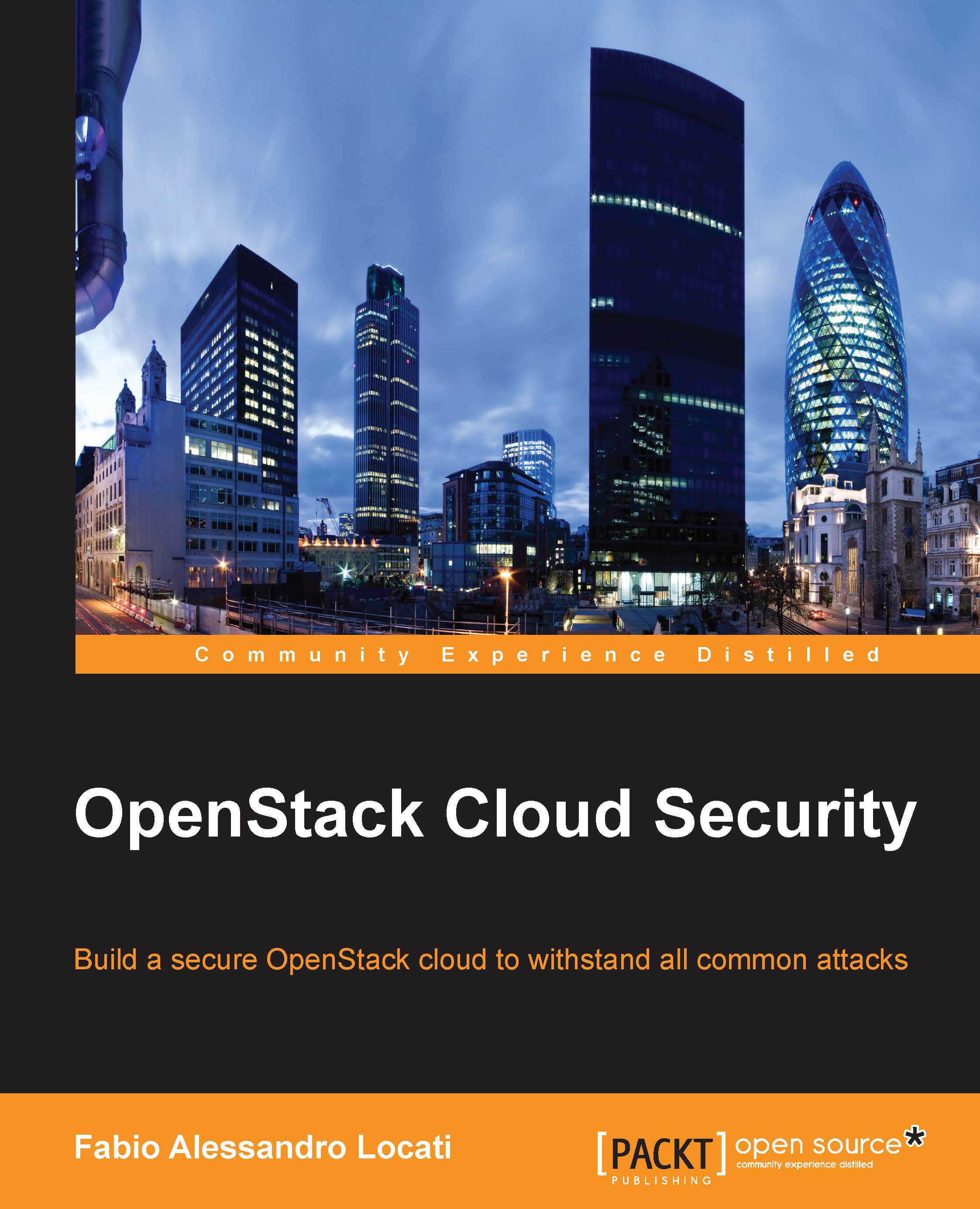
OpenStack Cloud Security
$38.99
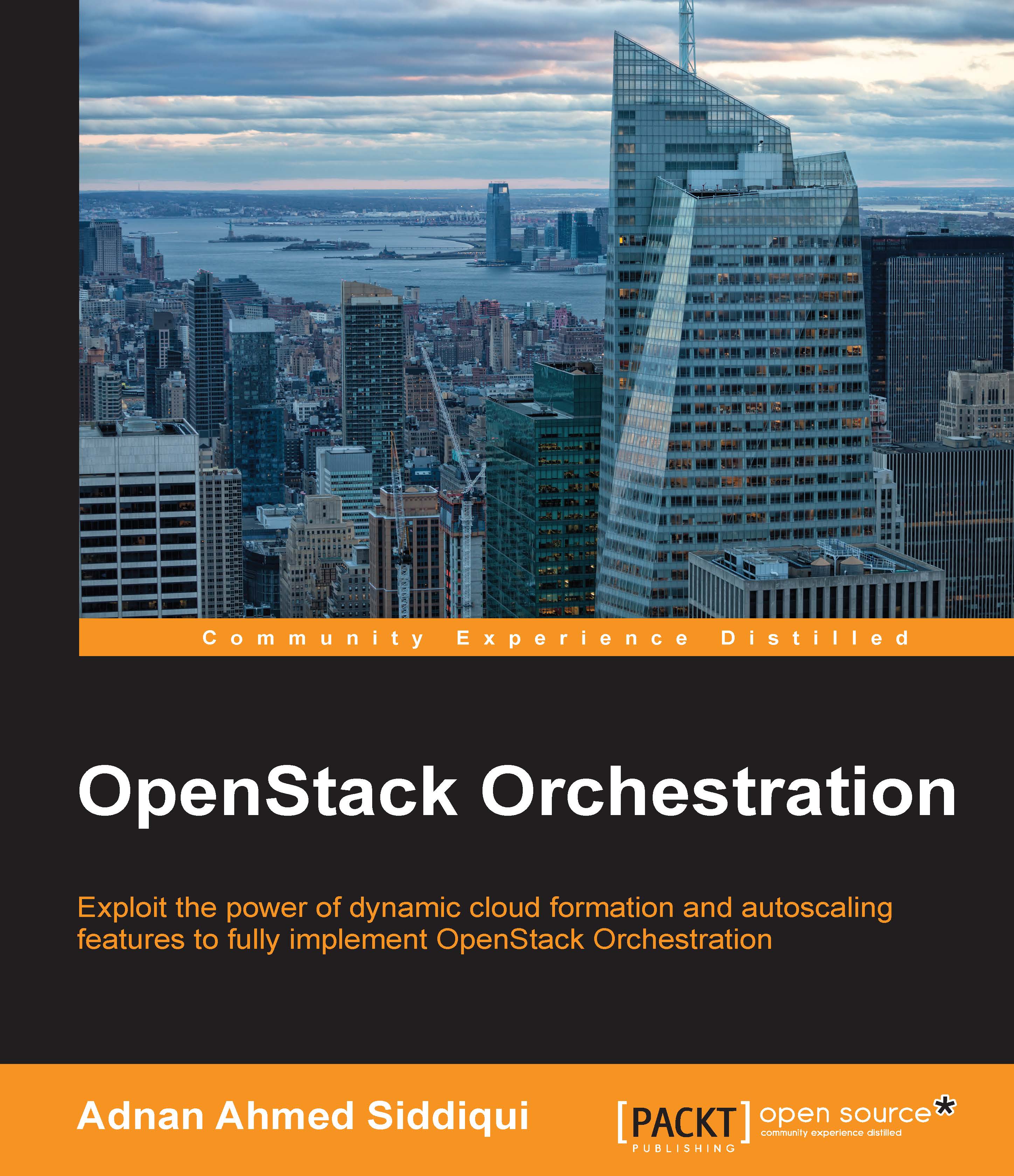
OpenStack Orchestration
$43.99
OpenStack Object Storage Essentials (Update)
$32.99
Total $ 115.97 Stars icon

Table of Contents

12 Chapters
1. Cloud Storage – Why Can't I Be Like Google? Chevron down icon Chevron up icon
2. OpenStack Swift Architecture Chevron down icon Chevron up icon
3. Installing OpenStack Swift Chevron down icon Chevron up icon
4. Using Swift Chevron down icon Chevron up icon
5. Additional Swift Interfaces Chevron down icon Chevron up icon
6. Monitoring and Managing Swift Chevron down icon Chevron up icon
7. Docker Intercepts Swift Chevron down icon Chevron up icon
8. Choosing the Right Hardware Chevron down icon Chevron up icon
9. Tuning Your Swift Installation Chevron down icon Chevron up icon
10. Additional Resources Chevron down icon Chevron up icon
A. Swift CLI Commands Chevron down icon Chevron up icon
Index Chevron down icon Chevron up icon

Customer reviews

Rating distribution
Full star icon Full star icon Full star icon Full star icon Full star icon 5
(1 Ratings)
5 star 100%
4 star 0%
3 star 0%
2 star 0%
1 star 0%
Frank Wang Aug 27, 2015
Full star icon Full star icon Full star icon Full star icon Full star icon 5
This is an excellent book to learn and get up to speed on OpenStack Swift. While some knowledge of cloud storage, open source, and script programming will help to guide through the book easier, this book offers some overview in cloud storage before diving in on Swift. While the book has dedicated a chapter to describe the Swift architecture, the real value is in the hands-on approach. The book provides real examples to illustrate how to prepare, install, use, tune, monitor and manage the Swift. If you follow thorough and understand the details, it will prepare you well in diving into OpenStack Swift. Even if your job does not require the deep-dive, this book will allow you to have a good grasp on what OpenStack Object Storage is about. As a bonus, this book has dedicated a chapter on how to setup Swift on top of Docker. This will be very helpful to those who are already familiar with Docker. Overall this is a must-read book for those who want to gain a working knowledge of Swift.
Amazon Verified review Amazon
Get free access to Packt library with over 7500+ books and video courses for 7 days!
Start Free Trial

FAQs

What is the digital copy I get with my Print order? Chevron down icon Chevron up icon

When you buy any Print edition of our Books, you can redeem (for free) the eBook edition of the Print Book you’ve purchased. This gives you instant access to your book when you make an order via PDF, EPUB or our online Reader experience.

What is the delivery time and cost of print book? Chevron down icon Chevron up icon

Shipping Details

USA:

'

Economy: Delivery to most addresses in the US within 10-15 business days

Premium: Trackable Delivery to most addresses in the US within 3-8 business days

UK:

Economy: Delivery to most addresses in the U.K. within 7-9 business days.
Shipments are not trackable

Premium: Trackable delivery to most addresses in the U.K. within 3-4 business days!
Add one extra business day for deliveries to Northern Ireland and Scottish Highlands and islands
EU:

Premium: Trackable delivery to most EU destinations within 4-9 business days.

Australia:

Economy: Can deliver to P. O. Boxes and private residences.
Trackable service with delivery to addresses in Australia only.
Delivery time ranges from 7-9 business days for VIC and 8-10 business days for Interstate metro
Delivery time is up to 15 business days for remote areas of WA, NT & QLD.

Premium: Delivery to addresses in Australia only
Trackable delivery to most P. O. Boxes and private residences in Australia within 4-5 days based on the distance to a destination following dispatch.

India:

Premium: Delivery to most Indian addresses within 5-6 business days

Rest of the World:

Premium: Countries in the American continent: Trackable delivery to most countries within 4-7 business days

Asia:

Premium: Delivery to most Asian addresses within 5-9 business days

Disclaimer:
All orders received before 5 PM U.K time would start printing from the next business day. So the estimated delivery times start from the next day as well. Orders received after 5 PM U.K time (in our internal systems) on a business day or anytime on the weekend will begin printing the second to next business day. For example, an order placed at 11 AM today will begin printing tomorrow, whereas an order placed at 9 PM tonight will begin printing the day after tomorrow.


Unfortunately, due to several restrictions, we are unable to ship to the following countries:

  1. Afghanistan
  2. American Samoa
  3. Belarus
  4. Brunei Darussalam
  5. Central African Republic
  6. The Democratic Republic of Congo
  7. Eritrea
  8. Guinea-bissau
  9. Iran
  10. Lebanon
  11. Libiya Arab Jamahriya
  12. Somalia
  13. Sudan
  14. Russian Federation
  15. Syrian Arab Republic
  16. Ukraine
  17. Venezuela
What is custom duty/charge? Chevron down icon Chevron up icon

Customs duty are charges levied on goods when they cross international borders. It is a tax that is imposed on imported goods. These duties are charged by special authorities and bodies created by local governments and are meant to protect local industries, economies, and businesses.

Do I have to pay customs charges for the print book order? Chevron down icon Chevron up icon

The orders shipped to the countries that are listed under EU27 will not bear custom charges. They are paid by Packt as part of the order.

List of EU27 countries: www.gov.uk/eu-eea:

A custom duty or localized taxes may be applicable on the shipment and would be charged by the recipient country outside of the EU27 which should be paid by the customer and these duties are not included in the shipping charges been charged on the order.

How do I know my custom duty charges? Chevron down icon Chevron up icon

The amount of duty payable varies greatly depending on the imported goods, the country of origin and several other factors like the total invoice amount or dimensions like weight, and other such criteria applicable in your country.

For example:

  • If you live in Mexico, and the declared value of your ordered items is over $ 50, for you to receive a package, you will have to pay additional import tax of 19% which will be $ 9.50 to the courier service.
  • Whereas if you live in Turkey, and the declared value of your ordered items is over € 22, for you to receive a package, you will have to pay additional import tax of 18% which will be € 3.96 to the courier service.
How can I cancel my order? Chevron down icon Chevron up icon

Cancellation Policy for Published Printed Books:

You can cancel any order within 1 hour of placing the order. Simply contact customercare@packt.com with your order details or payment transaction id. If your order has already started the shipment process, we will do our best to stop it. However, if it is already on the way to you then when you receive it, you can contact us at customercare@packt.com using the returns and refund process.

Please understand that Packt Publishing cannot provide refunds or cancel any order except for the cases described in our Return Policy (i.e. Packt Publishing agrees to replace your printed book because it arrives damaged or material defect in book), Packt Publishing will not accept returns.

What is your returns and refunds policy? Chevron down icon Chevron up icon

Return Policy:

We want you to be happy with your purchase from Packtpub.com. We will not hassle you with returning print books to us. If the print book you receive from us is incorrect, damaged, doesn't work or is unacceptably late, please contact Customer Relations Team on customercare@packt.com with the order number and issue details as explained below:

  1. If you ordered (eBook, Video or Print Book) incorrectly or accidentally, please contact Customer Relations Team on customercare@packt.com within one hour of placing the order and we will replace/refund you the item cost.
  2. Sadly, if your eBook or Video file is faulty or a fault occurs during the eBook or Video being made available to you, i.e. during download then you should contact Customer Relations Team within 14 days of purchase on customercare@packt.com who will be able to resolve this issue for you.
  3. You will have a choice of replacement or refund of the problem items.(damaged, defective or incorrect)
  4. Once Customer Care Team confirms that you will be refunded, you should receive the refund within 10 to 12 working days.
  5. If you are only requesting a refund of one book from a multiple order, then we will refund you the appropriate single item.
  6. Where the items were shipped under a free shipping offer, there will be no shipping costs to refund.

On the off chance your printed book arrives damaged, with book material defect, contact our Customer Relation Team on customercare@packt.com within 14 days of receipt of the book with appropriate evidence of damage and we will work with you to secure a replacement copy, if necessary. Please note that each printed book you order from us is individually made by Packt's professional book-printing partner which is on a print-on-demand basis.

What tax is charged? Chevron down icon Chevron up icon

Currently, no tax is charged on the purchase of any print book (subject to change based on the laws and regulations). A localized VAT fee is charged only to our European and UK customers on eBooks, Video and subscriptions that they buy. GST is charged to Indian customers for eBooks and video purchases.

What payment methods can I use? Chevron down icon Chevron up icon

You can pay with the following card types:

  1. Visa Debit
  2. Visa Credit
  3. MasterCard
  4. PayPal
What is the delivery time and cost of print books? Chevron down icon Chevron up icon

Shipping Details

USA:

'

Economy: Delivery to most addresses in the US within 10-15 business days

Premium: Trackable Delivery to most addresses in the US within 3-8 business days

UK:

Economy: Delivery to most addresses in the U.K. within 7-9 business days.
Shipments are not trackable

Premium: Trackable delivery to most addresses in the U.K. within 3-4 business days!
Add one extra business day for deliveries to Northern Ireland and Scottish Highlands and islands

EU:

Premium: Trackable delivery to most EU destinations within 4-9 business days.

Australia:

Economy: Can deliver to P. O. Boxes and private residences.
Trackable service with delivery to addresses in Australia only.
Delivery time ranges from 7-9 business days for VIC and 8-10 business days for Interstate metro
Delivery time is up to 15 business days for remote areas of WA, NT & QLD.

Premium: Delivery to addresses in Australia only
Trackable delivery to most P. O. Boxes and private residences in Australia within 4-5 days based on the distance to a destination following dispatch.

India:

Premium: Delivery to most Indian addresses within 5-6 business days

Rest of the World:

Premium: Countries in the American continent: Trackable delivery to most countries within 4-7 business days

Asia:

Premium: Delivery to most Asian addresses within 5-9 business days

Disclaimer:
All orders received before 5 PM U.K time would start printing from the next business day. So the estimated delivery times start from the next day as well. Orders received after 5 PM U.K time (in our internal systems) on a business day or anytime on the weekend will begin printing the second to next business day. For example, an order placed at 11 AM today will begin printing tomorrow, whereas an order placed at 9 PM tonight will begin printing the day after tomorrow.


Unfortunately, due to several restrictions, we are unable to ship to the following countries:

  1. Afghanistan
  2. American Samoa
  3. Belarus
  4. Brunei Darussalam
  5. Central African Republic
  6. The Democratic Republic of Congo
  7. Eritrea
  8. Guinea-bissau
  9. Iran
  10. Lebanon
  11. Libiya Arab Jamahriya
  12. Somalia
  13. Sudan
  14. Russian Federation
  15. Syrian Arab Republic
  16. Ukraine
  17. Venezuela
Modal Close icon
Modal Close icon