Search icon CANCEL
Subscription
0
Cart icon
Your Cart (0 item)
Close icon
You have no products in your basket yet
Save more on your purchases! discount-offer-chevron-icon
Savings automatically calculated. No voucher code required.
Arrow left icon
Explore Products
Best Sellers
New Releases
Books
Videos
Audiobooks
Learning Hub
Newsletter Hub
Free Learning
Arrow right icon
timer SALE ENDS IN
0 Days
:
00 Hours
:
00 Minutes
:
00 Seconds
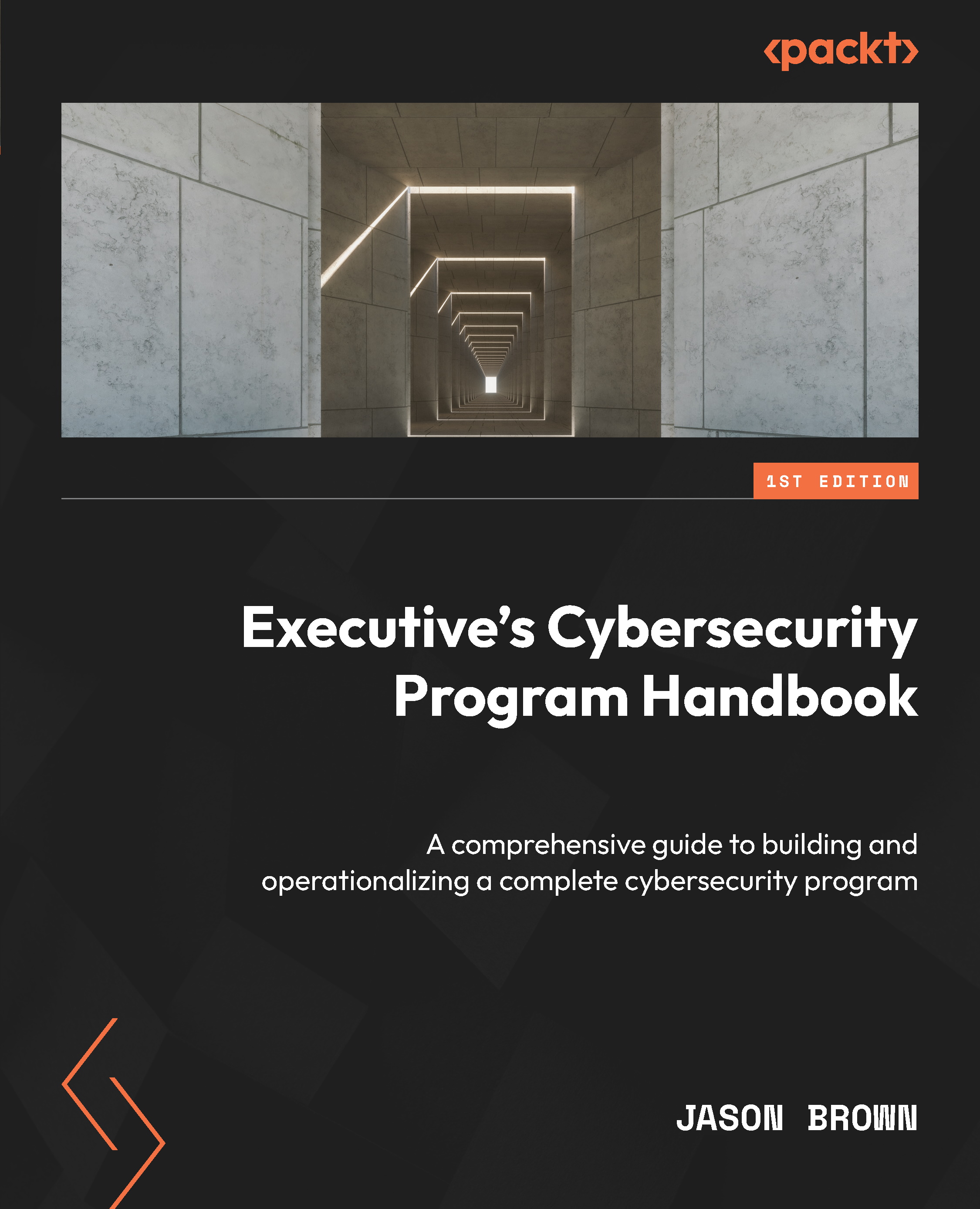
Executive's Cybersecurity Program Handbook

Executive's Cybersecurity Program Handbook: A comprehensive guide to building and operationalizing a complete cybersecurity program

eBook
$9.99 $35.99
Paperback
$44.99
Subscription
Free Trial
Renews at $19.99p/m

What do you get with Print?

Product feature icon Instant access to your digital copy whilst your Print order is Shipped
Product feature icon Paperback book shipped to your preferred address
Product feature icon Redeem a companion digital copy on all Print orders
Product feature icon Access this title in our online reader with advanced features
Product feature icon DRM FREE - Read whenever, wherever and however you want
Product feature icon AI Assistant (beta) to help accelerate your learning
Modal Close icon
Payment Processing...
tick Completed

Shipping Address

Billing Address

Shipping Methods
Table of content icon View table of contents Preview book icon Preview Book

Executive's Cybersecurity Program Handbook

The First 90 Days

Congratulations and welcome to the cybersecurity club! Whether you are just starting off on your cybersecurity career or are a seasoned professional, your first 90 days as the head of security can be tough – yet rewarding. During your first 90 days as the head of security, you will be challenged to learn the business and its processes, build new relationships, and gain an understanding of what is important to the company. You will need to hold meetings with your peers to better understand the technology or security stacks being used at the company.

The ability to develop strong relationships early on in your tenure will pay off in the long run. Your co-workers will get to not only know you by name but also get to know you personally and professionally. This is also your opportunity to do the same. The key is to build good, strong relationships early so you are not only approachable, but people feel comfortable talking to you.

Many in the business world see information security as the department of, "No!" where security trumps everything, from stopping projects to blocking new business processes. Information security departments must take a different stance when it comes to dealing with kids running with scissors. We must engrain ourselves into the business to see how it runs, and that will come through relationship building. In this first chapter, we will begin to look at what steps you should take in the first 90 days as the head of security at your organization.

In this chapter, we’ll be covering the following topics:

  • Getting executive buy-in
  • Budget or no budget?
  • Vision statements
  • Mission statements
  • Program charters
  • The pillars of your cybersecurity program

Getting executive buy-in

Building relationships with your peers is a must, and this includes those on the executive team. You want to build the same rapport with your executive team as with your peers, so they too feel comfortable speaking with you. This is also the time to begin discussing their thoughts about what the security program was meant to do and what the original direction was. These discussions do not stop with the executive team; if you are able, have the same discussion with key stakeholders and the board of directors.

Without getting executive buy-in, your program may stall or go nowhere. There are many reasons for this; however, the first step is to determine what the business needs are and how executives see them being achieved. Many professionals want to come in and inflict change in the cybersecurity program right away – I would advocate against this, at least for a little while. The reason is that you must understand what is important to the business. Remember, you have to crawl before you can walk. Information technology and cybersecurity are no different in their approaches when determining the vision you and other executives have of the cybersecurity program.

Cost and budget are also key components of the program, but are not as important as getting executive buy-in. A new head of security or chief information security officer could come in, build out the plan, forecast the budget, utilize several free open source cybersecurity tools, and it could still go nowhere as the executive team has decided to not move forward. It did not stop because of the budget – that was just a component of it. The real issue is that your executive team does not accept the decisions or technology planned for implementation. This is why getting executive buy-in and having conversations regarding the cybersecurity program are so important.

Next, we can begin to build out a budget that makes sense to everyone. Whether it is five dollars or a million dollars, there are plenty of ways to secure the business; however, the direction you want to go in with the program is up to you.

Budget or no budget?

A budget will make or break a department. Change my mind! That is a very true statement. Or is it? It is what you do with the budget you are given that will make or break a department. Organizations are hard-pressed to spend money on cybersecurity. Why? Because people think “It has never happened to us yet, so why should we bother?” or “We are too small to be a target.” However, mindsets are beginning to change. Many on the business side see cybersecurity or information technology as a sinkhole – one the business pours money into but never sees anything come of it. It is up to you to sell your ideas, get funding, and spend it accordingly.

Cybersecurity, however, is not something to take lightly or brush off as a second thought. States and the federal government are enacting breach notification laws for public and private sector organizations. Cyber insurance companies are serious, too, as they want to ensure their clients are performing their due diligence in reducing cyber risk across the organization. While not everything requires spending the business’s hard-earned money, certain aspects of cybersecurity do require funding.

Cybersecurity spending is also reaching all-time highs. Between 2021 and 2025, cybersecurity spending is expected to reach $1.75 trillion. According to Steve Morgan, founder of Cybersecurity Ventures, the market was only worth $3.5 billion in 2004 (Braue)[1]. That is a 500% increase (I am terrible at math). The Fog of More is a phrase characterized in cybersecurity as vendors trying to sell you the newest, shiniest blinky green and amber lights. How many of us have purchased new firewalls, only for them to collect dust? Better yet, how many of us have implemented firewalls with allow any/any/any rules? Don’t believe me? Performing a quick search on Shodan provides some disturbing statistics. For instance, there were over 286,000 results for open Telnet ports; VNC, almost 540,000 results; RDP, 582,000. These protocols, when exposed to the internet, increase the risk of your organization being attacked.

Not all vendors are bad; quite a few legitimately want to help. In the end, however, money talks. This is why it makes sense to rephrase “A budget will make or break your department ” to “ it is what you do with the budget that will define the department.” Do not let others fool you. You can churn out a robust security program without major funding.

Organizational technology stacks come in two different flavors, build and buy. While the build camp prefers to utilize as much open source technology and free utilities as possible, the buy camp wants to ensure that not only do they have support from a company, but they also have a single entity to blame if something goes wrong. While some concepts in this book will require a company to purchase some type of IT resource, this book is not centered on CapEx purchases. There are plenty of free, low-cost, or no-cost solutions out there if your team is willing to allocate the resources and time to learn about concepts and learn the skills of the trade.

For instance, begin developing your company’s vision, mission, and program charters. This will set the foundation for your program.

Vision statements

The vision of the office of information security is to secure the organization while making security a second thought.

Many organizations tend to throw technology at a problem, but is that the right solution? What is the goal of the company’s information security program? What will make you and your team stand out as a force for delivering top-notch security services? As a security leader, you must first understand where you are and where you want to go. If you do not have an end goal, how will you know how to get there?

A vision statement is a high-level description of how the program strives to achieve success. For instance, the preceding quote is a vision statement that could be used for a security department. It is intended to not only state the purpose of the department but the overall goal. A phrase I like to use for our security program is “Employees already think of cybersecurity as a second thought – I intend to keep it that way.”

Why is that statement important to me and our program? We want our security program to be as robust as possible and protect our systems and data while keeping our users safe. Information security should enable while making it easy for those who are not technically savvy. It should be as transparent as possible without always being in your face. Users should not have to read an entire manual to learn how to do their jobs, which are already tough without adding more layers on top.

The vision statement should depict what is most important to the department or organization. It should not be lengthy―only three sentences or fewer, but make it meaningful. It can be internal or external customer-facing, but make it a way of marketing yourself to others. As the security field is dynamic, a vision statement does not have to remain static and can evolve over time. One could write a vision statement and a few years down the line, decide to change it.

Here’s an example of a vision statement:

The Institute for Information Security & Privacy (IISP) at Georgia Tech is as an international leader in researching, developing, and disseminating technical solutions and policy about cybersecurity and privacy. We assemble strong, innovative, multi-disciplinary teams to address contemporary and future cybersecurity or privacy challenges faced by government, industry and individuals. Our graduates become leaders in government, scientific, industry and entrepreneurial communities.

—Georgia Tech University (https://www.scs.gatech.edu/research/institutes-centers)

There is no right way or wrong way to create a vision statement for your department. With one in place, however, it provides context for the goals and objectives that the department strives to achieve. It also shows that the department takes cybersecurity seriously in the types of services it will provide to its customers.

While vision statements are important for providing context for what the department strives to achieve, mission statements are equally as important. Mission statements depict why the department exists.

Mission statements

One may think, “Doesn’t a mission statement belong to the business?” While businesses have a mission statement, departments should have one too. Business-style mission statements articulate the purpose of the business/department or establishes the reason for their existence. Some famous mission statements include the following:

To bring the best user experience to its customers through its innovative hardware, software, and services.

—Apple (https://mission-statement.com/apple/)

To empower every person and every organization on the planet to achieve more.

—Microsoft (https://www.comparably.com/companies/microsoft/mission)

Accelerating the world’s transition to sustainable energy.

—Tesla (https://www.tesla.com/about)

What is your security department’s reason for existing? Is it to protect your organization’s sensitive data? Is it to thwart those who would do harm to your organization? How about securing and protecting the free flow of information across the world? I am sure we all have a back story as to why the newly minted cybersecurity manager or chief information security officer position opened at the company. What were the circumstances around your position being created? These questions do not necessarily have or need to have answers. They are there to help you decide how to construct a mission statement.

Before writing a mission statement, understand the culture and, again, what is important to the business. Write one, or a few, select the ones you like best, and then solicit feedback. If you are lucky and have a few security employees that work with you, get their feedback too or ask them to join in.

Mission statements, much like vision statements, are not long: maybe a sentence or two. However, it must have meaning and be celebrated as the crux of how the department will operate. It should motivate employees to do better and be better. The statement should also cause your customer base (others inside and outside the organization) to want to contact you when something is wrong―or right! On day one, a new employee should know and understand the department’s mission statement.

Mission and vision statements are great in that they highlight the department’s importance and reasons for being a crucial part of the organization. Program charters help bring everything together as they show what a department is responsible for.

Program charters

What is your department responsible for? How will you go about setting policies for information technology and the rest of the organization? Does the department have oversight of how things are implemented, configured, and monitored? When establishing governance, the first thing people think of is building roles and responsibility matrices – responsible, accountable, consulted, and informed (RACI) charts, and the like.

While RACI charts, roles, and responsibility matrices tend to provide the who and the what, they do not provide much detail. Program charters are intended to help fill in those gaps. They can be written to provide as little or as much detail as possible to help define what those responsibilities are and their intended purpose. For instance, most information security departments act as advisors for the rest of the information technology department. In this scenario, security has oversight of all aspects of information technology, but security does not implement or configure the IT resource (because of the separation of duties).

Much like policies, standards, and procedures (which we will cover in Chapter 4), a program charter document should have the following sections:

Purpose

What is the purpose of the charter? What is it trying to convey to the reader? Are there specific questions that the charter is trying to answer?

Scope

Charters impact an organization in many ways. They can impact internal and external employees, third-party vendors, contractors, whole departments, or the organization. Who will be impacted when this charter is put into place?

Responsibilities

Much like a RACI chart, what is the security department instructed to do? What is it responsible for? This is where you set the stage for how the department will function. Will it have oversight of many different aspects of information technology and the rest of the organization?

Those responsible for the charter

The charter must have a stakeholder and an executive sponsor to sign off on it. The stakeholder should be the head of the department, whether that is the Chief Security Officer (CSO), Chief Information Security Officer (CISO), director of information security, or manager of information security. These are the individuals who will be making decisions about how they see their cybersecurity department operating. The executive sponsor, whether that is a Chief Information Officer (CIO) or Chief Executive Officer (CEO), must have the authority to sign off on the charter. Once the charter is officially signed off on, it will have the teeth necessary to carry out the charter and any other supporting documentation.

In the previous sections, we have discussed how the security department will achieve success, its importance to the organization, and what it will be responsible for. To build on those concepts, we will take it a step further to discuss initiatives, strategy, and what is important to you as a leader.

The pillars of your cybersecurity program

What are the key initiatives for your security program? What is the strategy you will set that will direct the security program over the next 3-5 years? While we will talk more about developing a strategy in the next two chapters, this is where we will set the stage for that vision. First, start off with two to five high-level categories that are important to you and then begin to drill down from there. Each subcategory gets more defined as we drill down. An example of this is found in the following graphic:

Figure 1.1 – Cybersecurity pillars

Figure 1.1 – Cybersecurity pillars

In Figure 1.1, the diagram depicts what could be important for your security program. Major high-level ideas spur off from the main topic: Governance, Defense In Depth, People, and Innovation. From the high-level categories, it begins to narrow down from strategic to tactical. For instance, Innovation drills down to Automation or Transparency and Defense in Depth drills down to Zero Trust, Securing the Edge, and Security Architecture and Operations.

The subcategories begin to drill down into specific concepts or technologies, but do not state which technologies are used. You should not have more than four subcategories from the main topic, but you can have as many or as few as needed to tell the story. This begins the development of the strategic vision you have for your department.

Figure 1.2 – Cybersecurity Defense in Depth pillar

Figure 1.2 – Cybersecurity Defense in Depth pillar

The preceding figure depicts an expanded view of what defense in depth could look like. Starting with the main topic, Defense in Depth, we move toward the categories Zero Trust, Securing the Edge, and Security Architecture and Operations, followed by their respective subcategories.

Summary

Your first 90 days as a new manager, director, or CSO can be an exciting yet intimidating time. How will you get a budget for your program? How does executive management see information security? How will you develop a cybersecurity strategy? There are so many questions, yet few initial answers. Many come into the position and begin throwing technology at the problem, drowning in the Fog of More.

Remember, a security program is more than just technology; it also consists of people and processes. The key to getting started during your first 90 days is to understand the business, its processes, and how key stakeholders see the alignment of information technology and security to the business. Begin developing the department’s mission and vision statements and evangelize them throughout. Get others involved when creating these documents to gather their input and see what is important to them too.

As you have learned in this chapter, your first 90 days is also a time for creating new relationships with your coworkers. Relationships matter when it comes to information technology and security – make sure they are a priority. Eventually, you will have to work with colleagues from all different aspects of the business. Coworkers from finance, human resources, manufacturing, and other departments will have to be incorporated into your processes. Business continuity, incident response, and risk management are not information technology problems; they are business problems. As such, personnel from these departments need to be involved too.

We have now set the initial structure for the cybersecurity department, what is important, and why. In the next chapter, we will discuss the importance of a cybersecurity framework and its overall impact on the department and the organization. These two chapters help set the foundation you can begin to build a strategy on moving forward.

References

  1. Braue, David. (2021, September 10). Global Cybersecurity Spending to Exceed $1.75 Trillion From 2021-2025. Cyber Crime Magazine. https://cybersecurityventures.com/cybersecurity-spending-2021-2025/
Left arrow icon Right arrow icon
Download code icon Download Code

Key benefits

  • Get started as a cybersecurity executive and design an infallible security program
  • Perform assessments and build a strong risk management framework
  • Promote the importance of security within the organization through awareness and training sessions

Description

Ransomware, phishing, and data breaches are major concerns affecting all organizations as a new cyber threat seems to emerge every day, making it paramount to protect the security of your organization and be prepared for potential cyberattacks. This book will ensure that you can build a reliable cybersecurity framework to keep your organization safe from cyberattacks. This Executive’s Cybersecurity Program Handbook explains the importance of executive buy-in, mission, and vision statement of the main pillars of security program (governance, defence, people and innovation). You’ll explore the different types of cybersecurity frameworks, how they differ from one another, and how to pick the right framework to minimize cyber risk. As you advance, you’ll perform an assessment against the NIST Cybersecurity Framework, which will help you evaluate threats to your organization by identifying both internal and external vulnerabilities. Toward the end, you’ll learn the importance of standard cybersecurity policies, along with concepts of governance, risk, and compliance, and become well-equipped to build an effective incident response team. By the end of this book, you’ll have gained a thorough understanding of how to build your security program from scratch as well as the importance of implementing administrative and technical security controls.

Who is this book for?

This book is for you if you are a newly appointed security team manager, director, or C-suite executive who is in the transition stage or new to the information security field and willing to empower yourself with the required knowledge. As a Cybersecurity professional, you can use this book to deepen your knowledge and understand your organization's overall security posture. Basic knowledge of information security or governance, risk, and compliance is required.

What you will learn

  • Explore various cybersecurity frameworks such as NIST and ISO
  • Implement industry-standard cybersecurity policies and procedures effectively to minimize the risk of cyberattacks
  • Find out how to hire the right talent for building a sound cybersecurity team structure
  • Understand the difference between security awareness and training
  • Explore the zero-trust concept and various firewalls to secure your environment
  • Harden your operating system and server to enhance the security
  • Perform scans to detect vulnerabilities in software
Estimated delivery fee Deliver to United States

Economy delivery 10 - 13 business days

Free $6.95

Premium delivery 6 - 9 business days

$21.95
(Includes tracking information)

Product Details

Country selected
Publication date, Length, Edition, Language, ISBN-13
Publication date : Feb 24, 2023
Length: 232 pages
Edition : 1st
Language : English
ISBN-13 : 9781804619230
Category :
Concepts :

What do you get with Print?

Product feature icon Instant access to your digital copy whilst your Print order is Shipped
Product feature icon Paperback book shipped to your preferred address
Product feature icon Redeem a companion digital copy on all Print orders
Product feature icon Access this title in our online reader with advanced features
Product feature icon DRM FREE - Read whenever, wherever and however you want
Product feature icon AI Assistant (beta) to help accelerate your learning
Modal Close icon
Payment Processing...
tick Completed

Shipping Address

Billing Address

Shipping Methods
Estimated delivery fee Deliver to United States

Economy delivery 10 - 13 business days

Free $6.95

Premium delivery 6 - 9 business days

$21.95
(Includes tracking information)

Product Details

Publication date : Feb 24, 2023
Length: 232 pages
Edition : 1st
Language : English
ISBN-13 : 9781804619230
Category :
Concepts :

Packt Subscriptions

See our plans and pricing
Modal Close icon
$19.99 billed monthly
Feature tick icon Unlimited access to Packt's library of 7,000+ practical books and videos
Feature tick icon Constantly refreshed with 50+ new titles a month
Feature tick icon Exclusive Early access to books as they're written
Feature tick icon Solve problems while you work with advanced search and reference features
Feature tick icon Offline reading on the mobile app
Feature tick icon Simple pricing, no contract
$199.99 billed annually
Feature tick icon Unlimited access to Packt's library of 7,000+ practical books and videos
Feature tick icon Constantly refreshed with 50+ new titles a month
Feature tick icon Exclusive Early access to books as they're written
Feature tick icon Solve problems while you work with advanced search and reference features
Feature tick icon Offline reading on the mobile app
Feature tick icon Choose a DRM-free eBook or Video every month to keep
Feature tick icon PLUS own as many other DRM-free eBooks or Videos as you like for just $5 each
Feature tick icon Exclusive print discounts
$279.99 billed in 18 months
Feature tick icon Unlimited access to Packt's library of 7,000+ practical books and videos
Feature tick icon Constantly refreshed with 50+ new titles a month
Feature tick icon Exclusive Early access to books as they're written
Feature tick icon Solve problems while you work with advanced search and reference features
Feature tick icon Offline reading on the mobile app
Feature tick icon Choose a DRM-free eBook or Video every month to keep
Feature tick icon PLUS own as many other DRM-free eBooks or Videos as you like for just $5 each
Feature tick icon Exclusive print discounts

Frequently bought together


Stars icon
Total $ 139.97
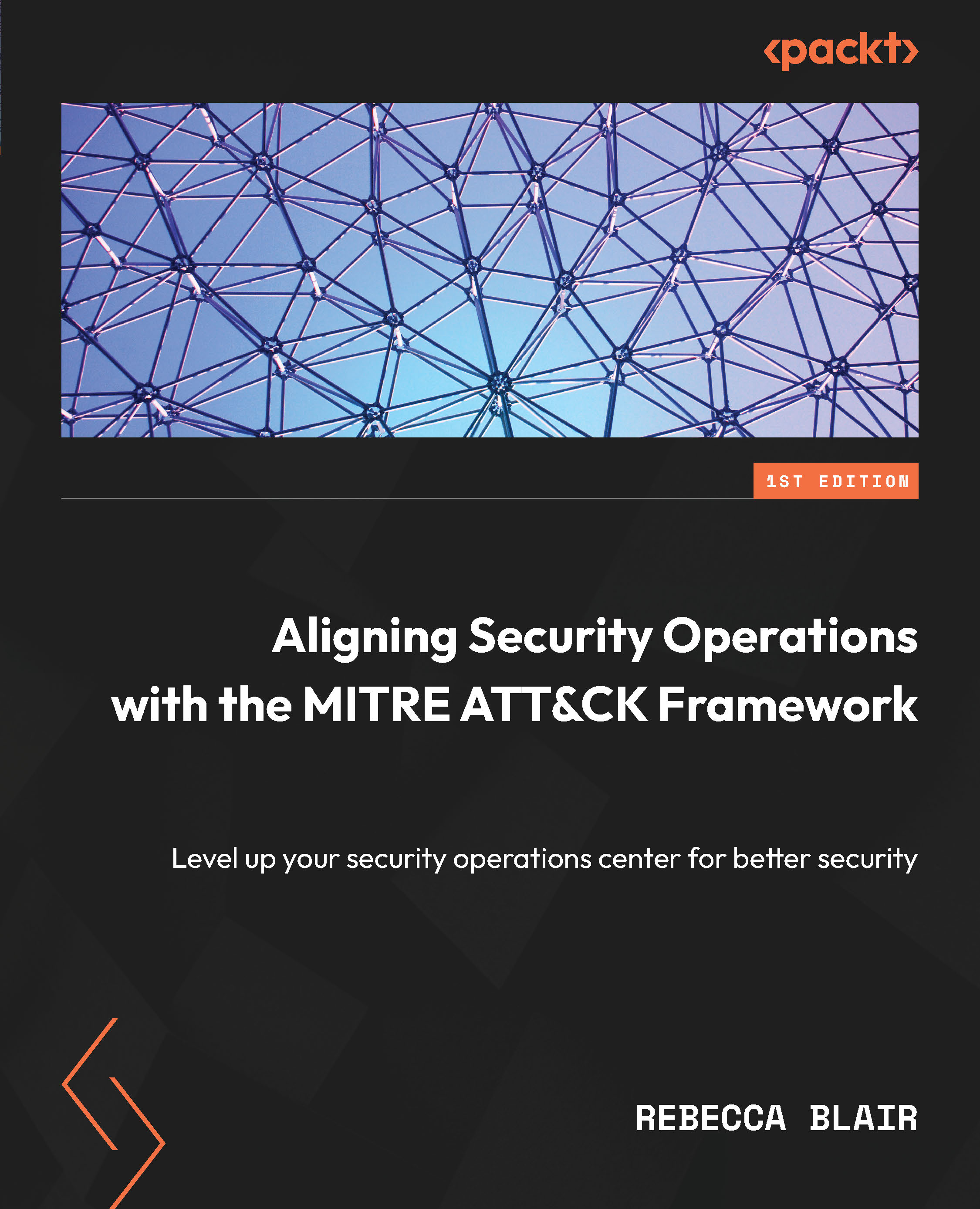
Aligning Security Operations with the MITRE ATT&CK Framework
$49.99
Executive's Cybersecurity Program Handbook
$44.99
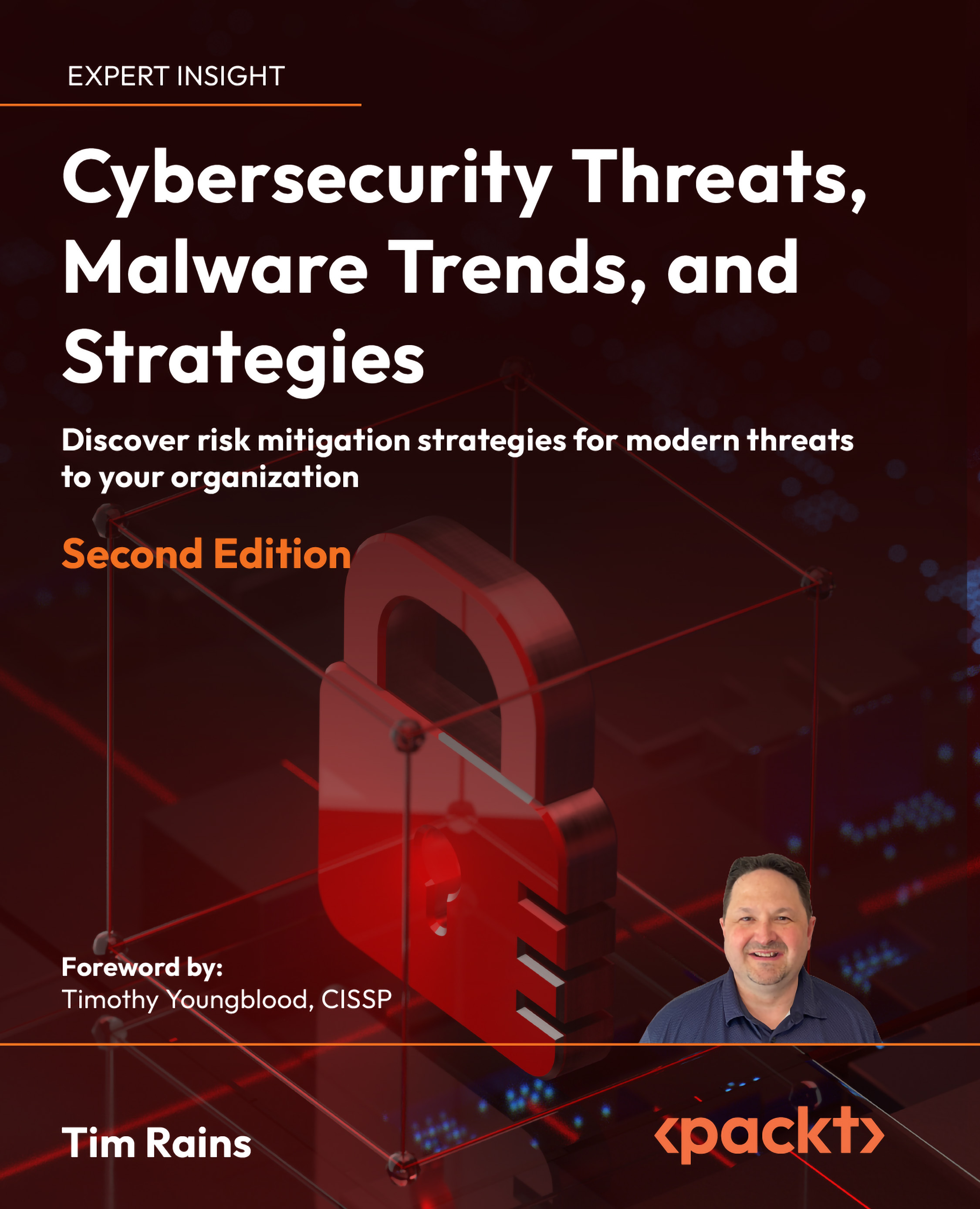
Cybersecurity Threats, Malware Trends, and Strategies
$44.99
Total $ 139.97 Stars icon

Table of Contents

17 Chapters
Part 1 – Getting Your Program Off the Ground Chevron down icon Chevron up icon
Chapter 1: The First 90 Days Chevron down icon Chevron up icon
Chapter 2: Choosing the Right Cybersecurity Framework Chevron down icon Chevron up icon
Chapter 3: Cybersecurity Strategic Planning through the Assessment Process Chevron down icon Chevron up icon
Part 2 – Administrative Cybersecurity Controls Chevron down icon Chevron up icon
Chapter 4: Establishing Governance through Policy Chevron down icon Chevron up icon
Chapter 5: The Security Team Chevron down icon Chevron up icon
Chapter 6: Risk Management Chevron down icon Chevron up icon
Chapter 7: Incident Response Chevron down icon Chevron up icon
Chapter 8: Security Awareness and Training Chevron down icon Chevron up icon
Part 3 – Technical Controls Chevron down icon Chevron up icon
Chapter 9: Network Security Chevron down icon Chevron up icon
Chapter 10: Computer and Server Security Chevron down icon Chevron up icon
Chapter 11: Securing Software Development through DevSecOps Chevron down icon Chevron up icon
Chapter 12: Testing Your Security and Building Metrics Chevron down icon Chevron up icon
Index Chevron down icon Chevron up icon
Other Books You May Enjoy Chevron down icon Chevron up icon

Customer reviews

Top Reviews
Rating distribution
Full star icon Full star icon Full star icon Full star icon Half star icon 4.7
(7 Ratings)
5 star 85.7%
4 star 0%
3 star 14.3%
2 star 0%
1 star 0%
Filter icon Filter
Top Reviews

Filter reviews by


Lester Chng Apr 23, 2023
Full star icon Full star icon Full star icon Full star icon Full star icon 5
Cybersecurity is no longer a risk that can be delegated or transferred away. This book provides an excellent overview of the risk and considerations that must be covered as the champion of cybersecurity and information security.
Amazon Verified review Amazon
Brandon B Jun 13, 2023
Full star icon Full star icon Full star icon Full star icon Full star icon 5
The Executive's Cybersecurity Program Handbook provides a comprehensive guide for executives, equipping them with the knowledge and tools needed to develop and implement effective cybersecurity programs. The book is filled with practical strategies, real-world examples, and actionable steps that empower leaders to protect their organizations from cyber threats. It has invaluable insights and practical advice, and is a must-read for any executive looking to gain a better understanding on implementing cybersecurity and other ways to safeguard their company's digital assets.
Amazon Verified review Amazon
GUNDERSTONE Jun 15, 2023
Full star icon Full star icon Full star icon Full star icon Full star icon 5
Author Jason Brown is passionate about data privacy and cybersecurity. Throughout his career, he has collaborated with businesses ranging from small to large international companies to establish strong data privacy and cybersecurity programs. He has held positions such as chief information security officer, virtual chief information security officer, and data privacy officer. Jason has earned numerous industry-leading certifications, including ISC2's CISSP, ISACA's CDPSE and COBIT, and ITIL. He holds a Bachelor of Science degree from Central Michigan University and a Master of Science from Ferris State University.The book's first section focuses on the challenges executives face initially in a new managerial or CSO role, particularly in their first 90 days. It provides insights into securing budgets, understanding executive management's perspective on information security, developing a cybersecurity strategy, navigating these challenges, and establishing a solid foundation for a successful cybersecurity program. Practical examples and case studies illustrate effective approaches to overcome these challenges.Cybersecurity Pillars is introduced as a framework for building a comprehensive program. These pillars include Governance, Defense in Depth, People, and Innovation. Each pillar represents a key area of focus and provides a strategic vision for the cybersecurity program.The Governance pillar covers Governance and Compliance and outlines how effective governance is essential for establishing clear organizational policies, procedures, and accountability structures. The book provides insights into risk management, compliance frameworks, and board reporting. It highlights the significance of aligning cybersecurity with business objectives and ensuring executive buy-in. It covers topics such as risk management, compliance, and board reporting.The Defense in Depth pillar explores the concept of layered security, emphasizing the need for multiple security measures to protect against various threats. It delves into subcategories such as Zero Trust, Securing the Edge, and Security Architecture and Operations, providing insights into implementing these strategies effectively.The People pillar highlights the significance of creating a strong security culture within the organization. It discusses the role of training and awareness programs, employee engagement, and fostering a sense of responsibility among all staff members.The Innovation pillar leverages emerging technologies and industry best practices to enhance the cybersecurity program. It explores topics such as automation, threat intelligence, and continuous monitoring, guiding how to incorporate these innovations into the program.The book highlights the significance of communicating and collaborating effectively with executives and the Board of Directors (BoD). It provides strategies for presenting cybersecurity information in a way that is easily understood by non-technical stakeholders, using storytelling and simplified metrics.The author emphasizes the need for ongoing cybersecurity program evaluation and improvement. It discusses using metrics and key performance indicators (KPIs) to measure the program's effectiveness and make informed decisions for enhancements.The book concludes by encouraging readers to actively participate in the cybersecurity community, sharing their knowledge and experiences. It provides resources for further learning and invites readers to provide feedback and contribute to improving future editions.Implementable Takeaways from the "Executive's Cybersecurity Program Handbook":1. Develop a comprehensive cybersecurity strategy: Take the time to understand your organization's unique cybersecurity challenges and risks. Develop a strategy that aligns with business objectives and addresses key areas such as governance, defense in depth, people, and innovation.2. Establish clear policies and procedures: Implement robust governance frameworks that define cybersecurity roles, responsibilities, and accountability. Develop policies and procedures that address risk management, compliance, and reporting requirements. Regularly review and update these policies to adapt to threats and regulatory changes.3. Embrace a defense-in-depth approach: Implement multiple security measures to protect against various threats. Consider implementing zero trust, securing the edge, and security architecture and operations. Regularly assess and update your defense mechanisms to stay ahead of emerging threats.4. Foster a strong security culture: Invest in training and awareness programs to educate employees about cybersecurity best practices. Encourage a sense of responsibility and ownership among all staff members. Promote a culture of reporting and addressing security incidents promptly.5. Collaborate and share knowledge: Engage with the global tech community to stay updated on emerging trends, technologies, and best practices. Share your insights and experiences through platforms like Packt to contribute to the collective knowledge of the cybersecurity community.6. Establish metrics and KPIs: Define measurable metrics to assess the effectiveness of your cybersecurity program. Develop key performance indicators (KPIs) that align with business objectives and provide meaningful insights into the program's performance. Regularly review and analyze these metrics to identify areas for improvement.7. Communicate effectively with executives and the board: Present cybersecurity information in a way that non-technical stakeholders easily understand. Use storytelling techniques and simplified metrics to convey the importance of cybersecurity and its impact on the organization's overall objectives. Build relationships and confidence with executive management and the Board of Directors to gain support for your cybersecurity initiatives.8. Continuously evaluate and improve: Regularly assess the effectiveness of your cybersecurity program and identify areas for improvement. Stay updated on emerging threats, technologies, and regulatory changes. Adapt your strategies and tactics to ensure the program remains robust and resilient.By implementing these takeaways from the "Executive's Cybersecurity Program Handbook," executives can enhance their organization's cybersecurity posture and effectively mitigate risks in today's evolving threat landscape.
Amazon Verified review Amazon
Tomica Kaniski Apr 04, 2023
Full star icon Full star icon Full star icon Full star icon Full star icon 5
If you're on your way to becoming head of (cyber)security or establishing your security department, this (not too long) book is for you. In it, you'll find steps you need to take from day one (like securing the budget and defining the pillars of your cybersecurity program), you will better understand the business, its processes, and key stakeholders through assessments, learn to establish necessary policies, who you need to help you, and how can you continuously upgrade "what you have" and upskill "whom you have".
Amazon Verified review Amazon
Vikas May 21, 2023
Full star icon Full star icon Full star icon Full star icon Full star icon 5
All security leaders find themselves making a fresh start when they join a new organization. They do have mental models and templates for gap assessments to find out the cyber security maturity of the organization. This is then used to make a roadmap to improve the maturity and protect their organizations from cyber attacks. These roadmaps rely on their past experiences and knowledge and lack the rigor of a comprehensive gap assessment and a detailed cyber security plan. This book simplifies this aspect by creating a go-to guide for building an effective cybersecurity program.Jason has done an excellent job to create this guidebook for security leaders/ CISOs. This can also be a useful resource for aspiring security leaders with experience in a few domains of Cyber Security to understand the entire cybersecurity program. It is also relevant for current security leaders to improve their existing programs.I liked Jason’s conversation style and his concise and simple way of explaining complex topics. The book covers the latest areas such as Cloud Security by sharing CSA (Cloud Security Alliance) frameworks and DevSecOps. I also liked the fact that Jason covers a lot of ground without getting bogged down by the complexities of cybersecurity. He shares useful references throughout the book which can help in further deep dive into specific areas. A core point Jason has stressed is for security leaders to shed the technical jargon and understand business to build an effective business case for their cybersecurity program.This book is a must-read for all security practitioners aspiring for security leadership roles.
Amazon Verified review Amazon
Get free access to Packt library with over 7500+ books and video courses for 7 days!
Start Free Trial

FAQs

What is the digital copy I get with my Print order? Chevron down icon Chevron up icon

When you buy any Print edition of our Books, you can redeem (for free) the eBook edition of the Print Book you’ve purchased. This gives you instant access to your book when you make an order via PDF, EPUB or our online Reader experience.

What is the delivery time and cost of print book? Chevron down icon Chevron up icon

Shipping Details

USA:

'

Economy: Delivery to most addresses in the US within 10-15 business days

Premium: Trackable Delivery to most addresses in the US within 3-8 business days

UK:

Economy: Delivery to most addresses in the U.K. within 7-9 business days.
Shipments are not trackable

Premium: Trackable delivery to most addresses in the U.K. within 3-4 business days!
Add one extra business day for deliveries to Northern Ireland and Scottish Highlands and islands

EU:

Premium: Trackable delivery to most EU destinations within 4-9 business days.

Australia:

Economy: Can deliver to P. O. Boxes and private residences.
Trackable service with delivery to addresses in Australia only.
Delivery time ranges from 7-9 business days for VIC and 8-10 business days for Interstate metro
Delivery time is up to 15 business days for remote areas of WA, NT & QLD.

Premium: Delivery to addresses in Australia only
Trackable delivery to most P. O. Boxes and private residences in Australia within 4-5 days based on the distance to a destination following dispatch.

India:

Premium: Delivery to most Indian addresses within 5-6 business days

Rest of the World:

Premium: Countries in the American continent: Trackable delivery to most countries within 4-7 business days

Asia:

Premium: Delivery to most Asian addresses within 5-9 business days

Disclaimer:
All orders received before 5 PM U.K time would start printing from the next business day. So the estimated delivery times start from the next day as well. Orders received after 5 PM U.K time (in our internal systems) on a business day or anytime on the weekend will begin printing the second to next business day. For example, an order placed at 11 AM today will begin printing tomorrow, whereas an order placed at 9 PM tonight will begin printing the day after tomorrow.


Unfortunately, due to several restrictions, we are unable to ship to the following countries:

  1. Afghanistan
  2. American Samoa
  3. Belarus
  4. Brunei Darussalam
  5. Central African Republic
  6. The Democratic Republic of Congo
  7. Eritrea
  8. Guinea-bissau
  9. Iran
  10. Lebanon
  11. Libiya Arab Jamahriya
  12. Somalia
  13. Sudan
  14. Russian Federation
  15. Syrian Arab Republic
  16. Ukraine
  17. Venezuela
What is custom duty/charge? Chevron down icon Chevron up icon

Customs duty are charges levied on goods when they cross international borders. It is a tax that is imposed on imported goods. These duties are charged by special authorities and bodies created by local governments and are meant to protect local industries, economies, and businesses.

Do I have to pay customs charges for the print book order? Chevron down icon Chevron up icon

The orders shipped to the countries that are listed under EU27 will not bear custom charges. They are paid by Packt as part of the order.

List of EU27 countries: www.gov.uk/eu-eea:

A custom duty or localized taxes may be applicable on the shipment and would be charged by the recipient country outside of the EU27 which should be paid by the customer and these duties are not included in the shipping charges been charged on the order.

How do I know my custom duty charges? Chevron down icon Chevron up icon

The amount of duty payable varies greatly depending on the imported goods, the country of origin and several other factors like the total invoice amount or dimensions like weight, and other such criteria applicable in your country.

For example:

  • If you live in Mexico, and the declared value of your ordered items is over $ 50, for you to receive a package, you will have to pay additional import tax of 19% which will be $ 9.50 to the courier service.
  • Whereas if you live in Turkey, and the declared value of your ordered items is over € 22, for you to receive a package, you will have to pay additional import tax of 18% which will be € 3.96 to the courier service.
How can I cancel my order? Chevron down icon Chevron up icon

Cancellation Policy for Published Printed Books:

You can cancel any order within 1 hour of placing the order. Simply contact customercare@packt.com with your order details or payment transaction id. If your order has already started the shipment process, we will do our best to stop it. However, if it is already on the way to you then when you receive it, you can contact us at customercare@packt.com using the returns and refund process.

Please understand that Packt Publishing cannot provide refunds or cancel any order except for the cases described in our Return Policy (i.e. Packt Publishing agrees to replace your printed book because it arrives damaged or material defect in book), Packt Publishing will not accept returns.

What is your returns and refunds policy? Chevron down icon Chevron up icon

Return Policy:

We want you to be happy with your purchase from Packtpub.com. We will not hassle you with returning print books to us. If the print book you receive from us is incorrect, damaged, doesn't work or is unacceptably late, please contact Customer Relations Team on customercare@packt.com with the order number and issue details as explained below:

  1. If you ordered (eBook, Video or Print Book) incorrectly or accidentally, please contact Customer Relations Team on customercare@packt.com within one hour of placing the order and we will replace/refund you the item cost.
  2. Sadly, if your eBook or Video file is faulty or a fault occurs during the eBook or Video being made available to you, i.e. during download then you should contact Customer Relations Team within 14 days of purchase on customercare@packt.com who will be able to resolve this issue for you.
  3. You will have a choice of replacement or refund of the problem items.(damaged, defective or incorrect)
  4. Once Customer Care Team confirms that you will be refunded, you should receive the refund within 10 to 12 working days.
  5. If you are only requesting a refund of one book from a multiple order, then we will refund you the appropriate single item.
  6. Where the items were shipped under a free shipping offer, there will be no shipping costs to refund.

On the off chance your printed book arrives damaged, with book material defect, contact our Customer Relation Team on customercare@packt.com within 14 days of receipt of the book with appropriate evidence of damage and we will work with you to secure a replacement copy, if necessary. Please note that each printed book you order from us is individually made by Packt's professional book-printing partner which is on a print-on-demand basis.

What tax is charged? Chevron down icon Chevron up icon

Currently, no tax is charged on the purchase of any print book (subject to change based on the laws and regulations). A localized VAT fee is charged only to our European and UK customers on eBooks, Video and subscriptions that they buy. GST is charged to Indian customers for eBooks and video purchases.

What payment methods can I use? Chevron down icon Chevron up icon

You can pay with the following card types:

  1. Visa Debit
  2. Visa Credit
  3. MasterCard
  4. PayPal
What is the delivery time and cost of print books? Chevron down icon Chevron up icon

Shipping Details

USA:

'

Economy: Delivery to most addresses in the US within 10-15 business days

Premium: Trackable Delivery to most addresses in the US within 3-8 business days

UK:

Economy: Delivery to most addresses in the U.K. within 7-9 business days.
Shipments are not trackable

Premium: Trackable delivery to most addresses in the U.K. within 3-4 business days!
Add one extra business day for deliveries to Northern Ireland and Scottish Highlands and islands

EU:

Premium: Trackable delivery to most EU destinations within 4-9 business days.

Australia:

Economy: Can deliver to P. O. Boxes and private residences.
Trackable service with delivery to addresses in Australia only.
Delivery time ranges from 7-9 business days for VIC and 8-10 business days for Interstate metro
Delivery time is up to 15 business days for remote areas of WA, NT & QLD.

Premium: Delivery to addresses in Australia only
Trackable delivery to most P. O. Boxes and private residences in Australia within 4-5 days based on the distance to a destination following dispatch.

India:

Premium: Delivery to most Indian addresses within 5-6 business days

Rest of the World:

Premium: Countries in the American continent: Trackable delivery to most countries within 4-7 business days

Asia:

Premium: Delivery to most Asian addresses within 5-9 business days

Disclaimer:
All orders received before 5 PM U.K time would start printing from the next business day. So the estimated delivery times start from the next day as well. Orders received after 5 PM U.K time (in our internal systems) on a business day or anytime on the weekend will begin printing the second to next business day. For example, an order placed at 11 AM today will begin printing tomorrow, whereas an order placed at 9 PM tonight will begin printing the day after tomorrow.


Unfortunately, due to several restrictions, we are unable to ship to the following countries:

  1. Afghanistan
  2. American Samoa
  3. Belarus
  4. Brunei Darussalam
  5. Central African Republic
  6. The Democratic Republic of Congo
  7. Eritrea
  8. Guinea-bissau
  9. Iran
  10. Lebanon
  11. Libiya Arab Jamahriya
  12. Somalia
  13. Sudan
  14. Russian Federation
  15. Syrian Arab Republic
  16. Ukraine
  17. Venezuela
Modal Close icon
Modal Close icon