Hi ,
For years, frontend development has carried a quiet assumption: when an interface needs to respond, animate, toggle, validate, or remember state, JavaScript should take the lead. That instinct made sense for a long time. Browsers were inconsistent, CSS was limited, and many interaction patterns genuinely needed script-heavy solutions to feel polished.
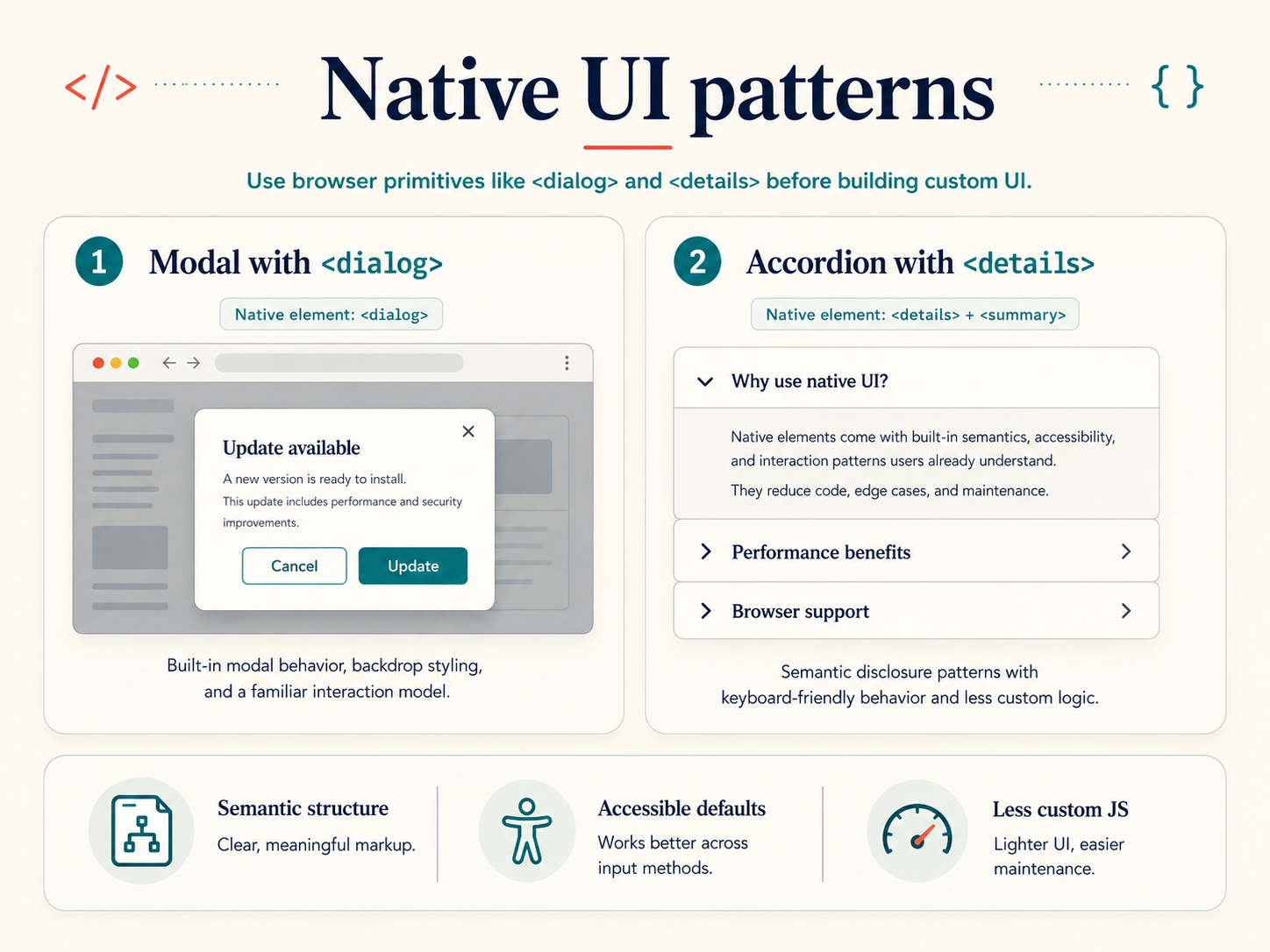
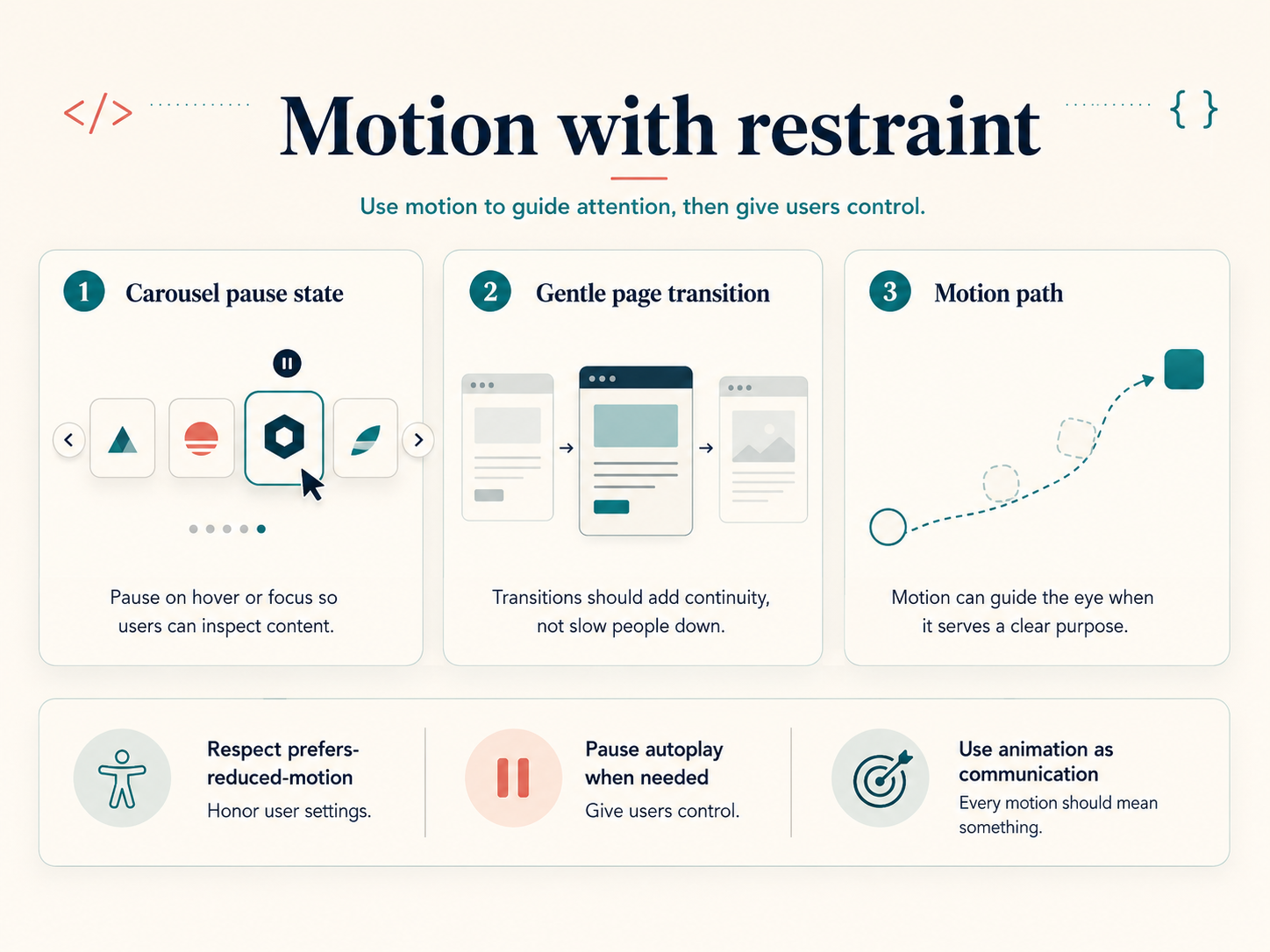
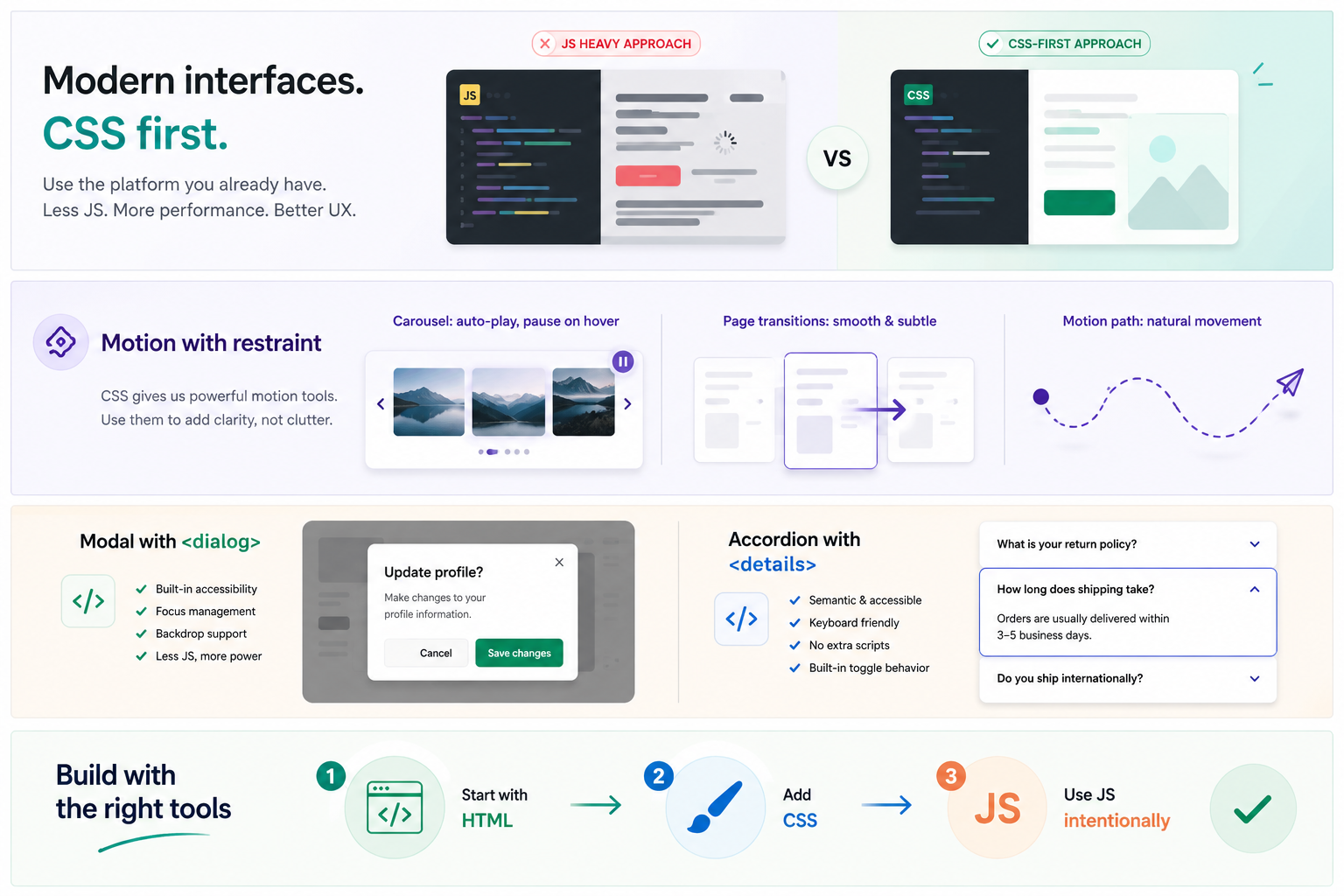
That landscape has changed. Modern HTML and CSS now handle far more than layout and decoration. They can respond to form state, respect system preferences, manage disclosure patterns, animate page transitions, create motion paths, style modal backdrops, and support accessible behavior that developers previously had to rebuild from scratch. The question is no longer “Can JavaScript do this?” because, of course, it can. The better question is “Should JavaScript be responsible for this?”
A CSS-first mindset does not mean rejecting JavaScript. It means giving the browser a fair chance before adding another dependency, state handler, event listener, or UI library. It asks developers to start with semantic HTML, layer CSS for presentation and interaction, and reserve JavaScript for the work it is uniquely good at: data fetching, complex application logic, persistence, coordination across systems, and genuinely dynamic behavior.
That small shift can change the quality of a frontend codebase. Interfaces become lighter, easier to reason about, more resilient when something fails, and often more accessible by default. For intermediate developers, this is one of the most useful habits to build: not writing less code for the sake of minimalism, but choosing the browser-native path when it gives users a better result.


 United States

 Great Britain
 India
India
 Germany
 France
 Canada
 Russia
 Spain
Spain
 Brazil
 Australia
 Singapore
 Canary Islands
 Hungary
 Ukraine
 Luxembourg
 Estonia
 Lithuania
 South Korea
 Turkey
 Switzerland
 Colombia
 Taiwan
 Chile
Chile
 Norway
 Ecuador
 Indonesia
 New Zealand
 Cyprus
 Denmark
 Finland
 Poland
 Malta
Malta
 Czechia
 Austria
 Sweden
 Italy
Italy
 Egypt
Egypt
 Belgium
 Portugal
 Slovenia
 Ireland
 Romania
 Greece
 Argentina
 Netherlands
 Bulgaria
 Latvia
 South Africa
 Malaysia
 Japan
Japan
 Slovakia
 Philippines
 Mexico
 Thailand